Food Grade Powder Packaging Machine: Hygiene & Compliance Buying Guide
For food powder manufacturers, packaging equipment does more than just fill containers — it directly impacts product safety, regulatory compliance and audit outcomes. Many buyers focus only on speed and price during procurement, only to discover later that the machine fails hygiene inspections, harbors residual product, or cannot meet food contact material standards.
A properly specified food-grade powder packaging machine reduces contamination risk, simplifies cleaning, supports traceability, and ensures long-term compliance with FDA, EU and local food safety regulations. This guide breaks down the core compliance requirements, key selection criteria, and product-specific recommendations for food powder packaging.
Core Compliance Requirements for Food Powder Packaging
Before evaluating any machine, confirm it meets these four foundational compliance pillars:
1. Food Contact Material Standards
All product contact surfaces must comply with regional food safety regulations.
- FDA 21 CFR for the US market
- EC 1935/2004 for the European Union
- Standard material: 304 stainless steel for general food products
- Upgrade to 316L stainless steel for acidic, high-fat or corrosive food formulations
- Seals, gaskets and contact parts must be food-grade silicone or PTFE, with no toxic additives
2. Sanitary Design Principles
Hygienic design prevents product buildup, bacterial growth and cross-contamination.
- Smooth, crevice-free welds and surfaces
- No dead zones, sharp corners or horizontal ledges where powder can accumulate
- Tool-free disassembly of all product contact parts
- Rounded edges and sloped surfaces for complete drainage and cleaning
- No exposed threads or fasteners in product contact zones
3. Weighing & Net Content Compliance
Packaged weight must stay within regulatory tolerance limits.
- Consistent filling accuracy within legal net content tolerances
- Calibratable weighing systems with traceable reference standards
- Batch weight recording capability for quality documentation
- Automatic rejection of out-of-spec packs
4. Traceability & Documentation
Food safety systems require full traceability of production and equipment.
- Recipe storage with batch parameter records
- Calibration history and maintenance logs
- Material certificates for all product contact components
- Clean-in-place (CIP) or clean-out-of-place (COP) procedure support
5 Key Selection Criteria for Food-Grade Powder Packers
1. Product Contact Construction
Start with material specification, not features.
- Confirm 304 or 316L stainless steel on all surfaces that touch product
- Verify seal and gasket materials are food-grade and documented
- Avoid painted surfaces, aluminum parts or untreated steel in product zones
- Prefer polished or electropolished finishes over brushed finishes for easier cleaning
2. Cleanability & Changeover Design
Cleaning frequency is higher in food production than in most other industries.
- Quick-release screw, hopper and filling tube assemblies
- No hidden cavities or trapped product zones
- Compatible with wet cleaning or dry cleaning procedures
- Minimal tools required for full disassembly
- Dust-tight construction to prevent cross-contamination between products
3. Filling Technology Match
Choose filling technology based on your specific powder properties.
- Volumetric cup fillers: Best for free-flowing, uniform food powders like granulated sugar, salt and grain blends
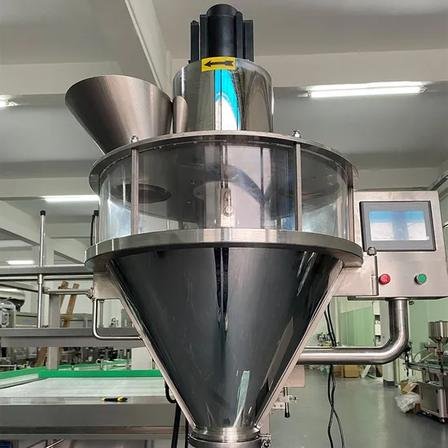
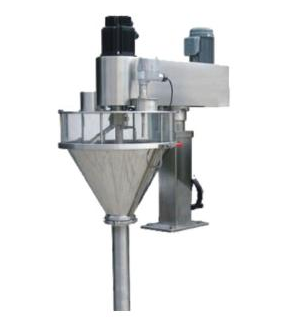
- Servo auger fillers: Most versatile for food powders; works well with flour, baking mixes, milk powder, spices and cohesive products
- Gravimetric servo fillers: Required for high-value products and strict net content compliance; recommended for infant formula, nutritional powders and premium food products
4. Dust Control & Containment
Food powder dust creates both hygiene and safety issues.
- Integrated point-of-fill dust extraction
- Enclosed product transfer between process stages
- Sealed hopper covers with filtered air venting
- Bag top cleaning before sealing to prevent product contamination on seals
5. Automation & Recipe Control
Multi-product food lines need fast, repeatable changeovers.
- On-board recipe storage for different products and pack sizes
- Quick parameter adjustment without mechanical changes
- Batch reporting and production data logging
- User access levels for production, quality and maintenance
Product-Specific Recommendations
Flour & Starch Products
- Recommended: Servo auger filler with large-diameter screw
- Key focus: Consistent feed, dust containment, easy cleaning between batches
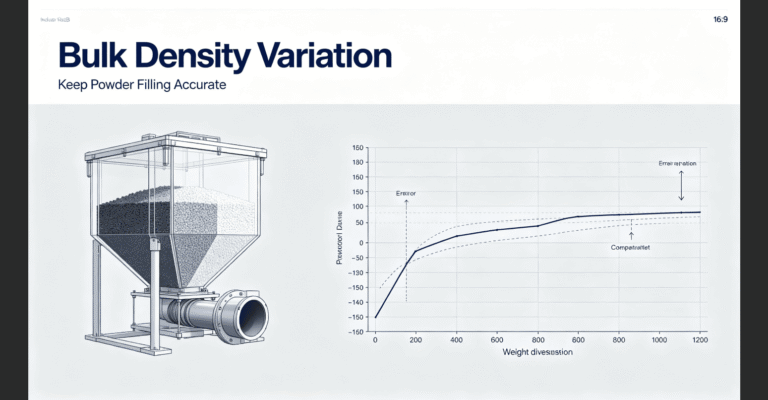
- Considerations: Bulk density variations between flour grades require good weighing control
Baking Mixes & Seasoning Blends
- Recommended: Quick-change servo auger filler with recipe storage
- Key focus: Fast changeover, cross-contamination prevention, accurate ingredient blend handling
- Considerations: Multiple SKUs and frequent formula changes demand tool-free disassembly
Milk Powder & Nutritional Powders
- Recommended: Gravimetric servo auger filler with vacuum conveying
- Key focus: High accuracy, hygienic design, full traceability
- Considerations: High product value and strict regulation justify premium weighing systems
Spices & Fine Food Additives
- Recommended: Small-volume precision auger filler
- Key focus: Accurate small-dose filling, flavor cross-contamination prevention
- Considerations: Strong flavors require thorough cleaning between products; dedicated screws per product family are good practice
Operational Compliance Best Practices
Even the best machine will fail audits without proper procedures.
- Establish a formal cleaning validation program with documented results after each changeover
- Schedule and record regular weighing system calibration using traceable weights
- Inspect seals and contact parts on a set schedule; replace before wear causes contamination risk
- Maintain full equipment documentation: material certificates, calibration records, maintenance logs
- Train operators on both machine operation and food safety hygiene requirements
Final Thoughts
Food-grade powder packaging is not an area to cut corners. A machine that does not meet hygiene and material standards creates product safety risk, regulatory exposure and potentially costly product recalls.
The right food-grade packaging machine balances compliance, cleanability, accuracy and productivity. It should not only meet current regulations, but also support your food safety program as standards continue to evolve.
If you need help specifying a food-grade powder packaging machine for your product, or want to confirm compliance requirements for your target market, our food industry engineering team can review your application and recommend a compliant, production-ready solution. Contact us today for a food packaging compliance consultation.