Powder Bridging in Auger Fillers: 8 Root Causes & Proven Field Fixes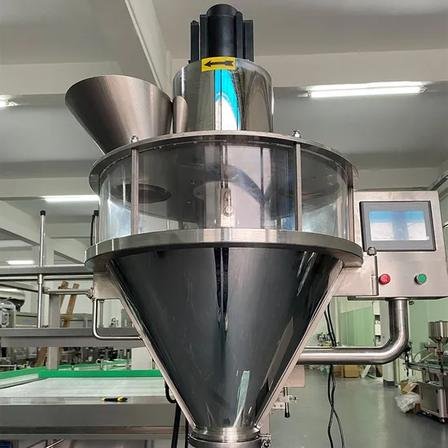
Every powder production manager knows the frustration: you start a batch, and 20 minutes in, the screw chokes. The auger spins but no powder comes out. Operators bang on the hopper side, pry it open, lose an hour of production, and waste pounds of product.
Most bridging issues are not a machine defect — they are a mismatch between material, hopper design, screw geometry and operating conditions. Based on hundreds of field retrofit projects, this guide breaks down why powder bridges form, 8 actionable fixes, and how to stop it from coming back.
What Is Powder Bridging & Why It Matters
Bridging (or arching) happens when powder particles lock together above the auger inlet, forming a stable arch that stops flow. Even if the screw keeps turning, no new material feeds in, leading to underfilled packs, inconsistent weight and unplanned downtime.
The real costs go far beyond lost time:
- Lost production: a single major bridging event can take 30–60 minutes to clear and reset
- Accuracy drift: partial bridging causes uneven screw fill, leading to ±2%+ weight error
- Material waste: caked and contaminated powder from manual clearing often has to be discarded
- Hygiene risks: forced disassembly and hand clearing introduces contamination risk
- GMP compliance issues: repeated manual intervention breaks sanitary protocols
8 Root Causes of Auger Filler Bridging & Clogging
Bridging almost never has a single cause. It is almost always a combination of material, equipment and operating factors.
1. Material properties
- High moisture content: particles stick together and form stronger arches
- Fine / ultra-fine particle size: larger surface area = more inter-particle friction
- Irregular particle shape: interlocking particles form more stable bridges
- Hygroscopic powders: absorb moisture from the air and cake over time
- Low bulk density: light powders compact and bridge far more easily than dense materials
2. Incorrect hopper geometry
- Hopper cone angle too shallow: standard 60° cones work for granules but cause arching with fine cohesive powders
- Sharp corners at the hopper outlet: powder traps and builds up into a solid plug
- Outlet diameter too small: restricts flow for cohesive, high-friction materials
3. Wrong screw profile for the material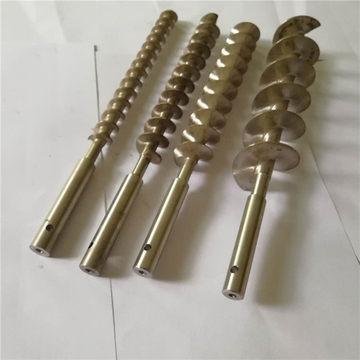
- Incorrect pitch / flute depth: can create suction or compaction at the inlet
- Screw root diameter too large: reduces effective flow area at the critical inlet zone
【 Screw Metering Machine Selection Guide】
4. Insufficient or poorly positioned feed agitation
- No agitator at all: cohesive fine powders will almost always bridge eventually
- Agitator too short: does not reach down to the auger inlet where bridges actually form
5. Unstable or extreme hopper levels
- Too low: powder compaction changes, flow becomes inconsistent and partial bridging is common
- Too high: the weight of powder above compacts the material at the inlet and plugs the screw
6. High ambient humidity
- Hygroscopic powders (sugar, milk powder, spice blends) absorb moisture and cake rapidly
- A very common problem in humid climates or during summer months
7. Poor cleaning between batches
- Residual powder builds up on hopper walls and screw flights
- Acts as a seed for new bridging and caking in the next production run
【 Screw Metering Machine Maintenance & Cleaning Guide】
8. Mismatched feeder speed
- Inlet feeder delivers material faster or slower than the auger consumes it
- Over-feeding causes compaction at the inlet; under-feeding causes starvation — both disrupt steady flow
8 Proven Fixes to Eliminate Bridging
Work from cheapest to most invasive. Most bridging issues can be resolved without replacing the whole machine.
1. Optimize hopper geometry for your powder
- For cohesive fine powders: use 70°–75° cone angle, not the standard 60°
- Round all internal corners; eliminate sharp edges that trap powder
- Increase outlet diameter where possible (balance with accuracy requirements)
- For severe cases: upgrade to a mass-flow hopper design instead of funnel flow
2. Match screw geometry to your material
- Fine / light powders: wide-pitch, shallow-flute screw to reduce compaction
- Dense / granular powders: narrower pitch to maintain dosing control
- The right screw reduces inlet compaction and pulls material down more evenly
3. Add a properly sized agitator or vibrator
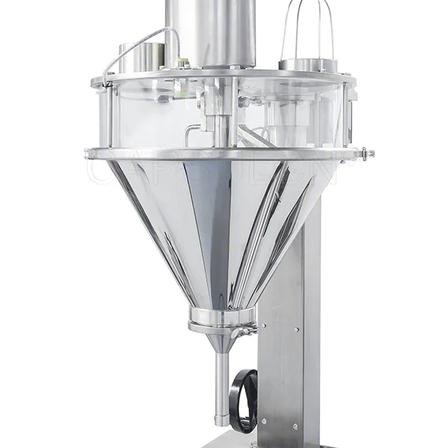
- Vertical agitator: best for most fine cohesive powders; breaks arches before they form
- Pneumatic vibrators: best for free-flowing powders that bridge only occasionally
- Critical rule: the agitator must reach down to the auger inlet zone — most factory-fit units are too short
Field warning: Never let operators bang on hopper sides with hammers. It dents stainless steel, creates hidden ledges that trap powder, and makes bridging permanently worse.
4. Control incoming material moisture and particle size
- Test moisture content for every incoming batch; reject out-of-spec material
- Sieve out agglomerates before feeding to the hopper
- Blend batches to normalize particle size distribution
5. Maintain a consistent hopper level
- Install a level sensor to control the inlet feeder automatically
- Keep hopper 40–70% full during production — avoid full top-filling or running near empty
- Consistent head pressure = consistent screw fill = less bridging
6. Control production area humidity
- Keep relative humidity between 40–55% RH for most food powders
- For highly hygroscopic products: use a heated hopper and dehumidified production air
- Keep hopper covers sealed to limit moist air exposure
7. Optimize feeder speed and supply rate
- Tune inlet feeder to exactly match auger consumption rate
- Avoid over-feeding: compaction at the inlet is one of the biggest hidden causes of bridging
- Use closed-loop level control for fully automatic, steady operation
8. Implement proper cleaning between batches
- Full disassembly and wipe down of hopper, screw and agitator every changeover
- Remove all caked-on residue from walls and screw flights
- Pay special attention to the outlet zone where bridging initiates
Common Misconceptions That Make Things Worse
- “Bigger outlet = less bridging” — Not always. Too large an outlet hurts filling accuracy and can actually make flow less consistent.
- “Just add a vibrator” — Vibrators make fine cohesive powders worse by compacting them further. For most food fine powders, a slow vertical agitator works far better.
- “It’s just bad powder” — While material matters, 70% of bridging cases can be fixed or greatly reduced with equipment and process adjustments.
Real Project Case: Plant Protein Powder Bridging Retrofit
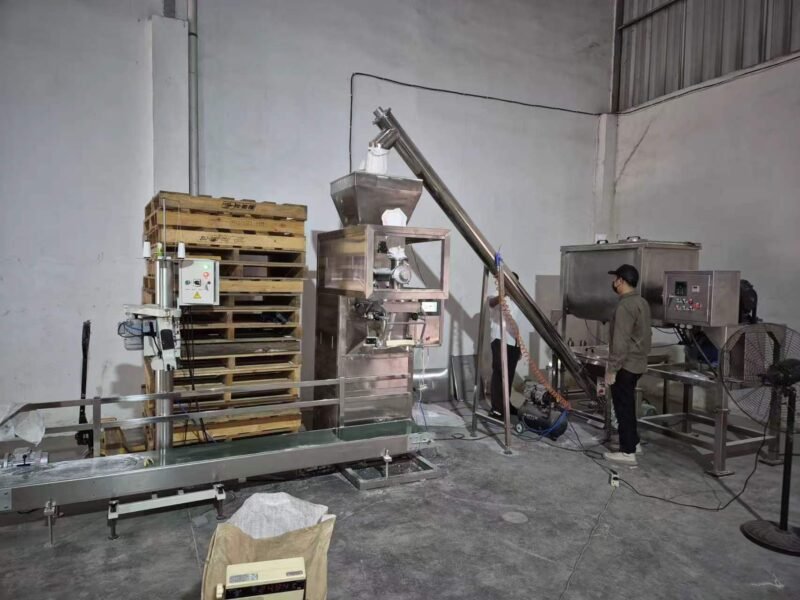
Client Background
A plant-based protein powder manufacturer in Henan, China. They ran two 30L auger fillers with standard 60° hoppers and no agitators, producing 500g stand-up pouches. Core pain points: 3–5 bridging events per shift, each taking 30–45 minutes to clear; filling accuracy swung ±1.8%+; high material waste from caked powder; operators had to manually stir the hopper constantly.
Core Requirements
- Eliminate unscheduled downtime from bridging
- Stabilize filling accuracy within ±0.5%
- Work with their existing protein powder formulation
- Minimal retrofit to existing machines
Our Solution
Retrofitted both existing auger fillers with:
- Modified 72° hopper cone inserts for mass flow
- Low-speed vertical agitators reaching down to the screw inlet
- Wide-pitch shallow-flute screws optimized for light protein powder
- Hopper level sensors with automatic feeder control
Results
- Downtime: bridging events dropped from 3–5 per shift to 0–1 per week — 92% reduction
- Accuracy: stabilized at ±0.3% to ±0.4% consistently
- Waste: caked powder waste reduced by 88%, saving approximately ¥280,000 per year
- Labor: removed the need for dedicated hopper-tending operators
Client Feedback
“We were ready to buy completely new machines because we thought our fillers just couldn’t handle protein powder. For a fraction of the cost, the retrofit fixed the bridging completely. We don’t have someone standing there stirring the hopper all day anymore.” — Production Manager Zhao (discretionary)
【LinkedIn – Full retrofit photo album of this protein powder line】
Frequently Asked Questions
Why does my auger filler only bridge on humid days?
Hygroscopic powders absorb moisture from the air, which makes particles stick together and form much stronger bridges. This is extremely common with sugar, salt, milk powder and spice blends. Controlling room humidity and keeping the hopper sealed will usually resolve it.
Will a bigger screw stop bridging?
Not usually. Bridging forms above the screw, at the hopper outlet. A screw with the wrong pitch can actually make it worse by compacting material further. Most of the time the fix is hopper geometry, agitation or material control — not a bigger screw.
Are vibrators good for powder bridging?
It depends on the powder. For granular, free-flowing materials, yes. For fine, cohesive, light powders, vibration often compacts the material further and makes bridging worse. For most food fine powders, a slow vertical agitator is far more effective.
Can bridging cause inaccurate fill weights?
Absolutely. Partial bridging restricts flow into the screw, so the screw does not fill completely each cycle. This leads to underfilled packs and wandering weight. If you see sudden accuracy drift with no machine changes, bridging is the first thing to check.
Summary
Powder bridging is one of the most common and most frustrating problems in powder filling, but it is almost always solvable. Most of the time it comes down to a mismatch between your material, your hopper design and your operating conditions — not a bad machine.
Work through the causes systematically, start with the lowest-cost fixes (material control, humidity, level), then move to equipment modifications if needed.
For help choosing the right screw for your powder, see our screw metering machine selection guide. For maintenance and cleaning best practices, refer to our screw metering machine maintenance guide.
Uniflow Packaging Machinery | Food-grade powder filling equipment and field retrofit services. We diagnose and fix bridging, accuracy and throughput issues on existing lines. Follow our 【LinkedIn】 for more field case studies, or subscribe to our 【YouTube channel】 for troubleshooting and retrofit tutorials. Contact our engineering team for a free bridging assessment of your line.