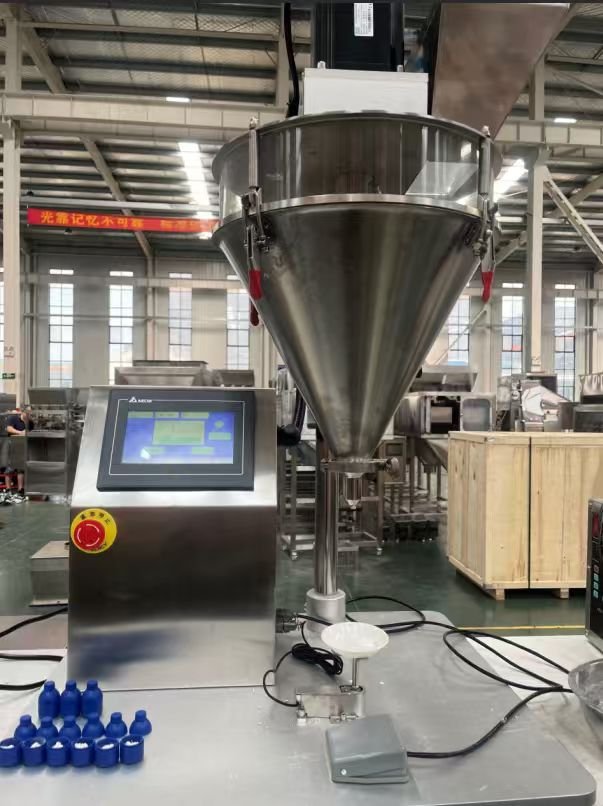
Looking for a tabletop powder filling machine for vitamin C powder, fine powders, and small-batch packaging? Discover how UF approaches powder filling applications that require easy cleaning, controlled dosing, and flexible equipment configurations.
Introduction: Finding the Right Powder Filling Machine for Vitamin C
Filling fine powders into jars, bottles, or pouches can present several challenges, especially when the material is sticky, dust-prone, or difficult to clean from the equipment.
For skincare manufacturers, supplement producers, and businesses handling small-batch powder packaging, choosing the right vitamin C powder filling machine is essential for efficient operation and convenient product changeovers.
In December 2023, UF received an inquiry from an Australian customer seeking a tabletop dry powder auger filler for vitamin C powder. The customer was interested in filling quantities ranging from 100 g to 250 g and specifically wanted a machine with a removable hopper for easy cleaning.
After learning more about the material and packaging requirements, UF discussed both the UF-P2T tabletop powder filling machine and the UF-P2 semi-automatic auger filling machine.
This application highlights several important considerations when selecting a powder filling machine for vitamin C and other fine, sticky powders.
Customer Requirements: 100 g to 250 g Vitamin C Powder Filling
The customer, an Australian skincare business, was looking for a compact powder filling solution suitable for relatively small quantities.
The main requirements were:
- Filling weight: 100–250 g per container.
- Product: Fine vitamin C powder.
- Material characteristics: Free-flowing but somewhat sticky.
- Cleaning requirements: A hopper that can be removed and washed easily.
- Machine type: A tabletop powder filling machine was initially preferred.
- Shipping destination: Australia, with Brisbane considered the nearest seaport for sea freight.
Although vitamin C powder was described as free-flowing, the customer also reported that it was sticky and could require thorough hopper cleaning.
This combination of characteristics matters when selecting a powder filling machine. A material may flow reasonably well during dosing but still adhere to internal surfaces, making cleaning and product changeovers more demanding.
For this reason, machine selection should consider not only the filling weight but also the powder’s flowability, adhesion, dust generation, and cleaning requirements.
UF-F2D vs. UF-F2: Which Powder Filler Is Suitable?
One of the first questions was whether the UF-F2D tabletop dry powder auger filler could handle the required 100–250 g filling range.
Based on the configuration discussed in the original inquiry, the UF-F2D had a maximum filling weight of 200 g. Since the customer needed to fill up to 250 g, UF initially recommended considering the UF-F2 semi-automatic powder filling machine.
Later, the customer renewed the inquiry through Alibaba and specifically requested a quotation for the tabletop UF-F2D.
This illustrates an important principle: the best powder filling machine depends on the required filling range and the actual application, not simply the machine’s size.
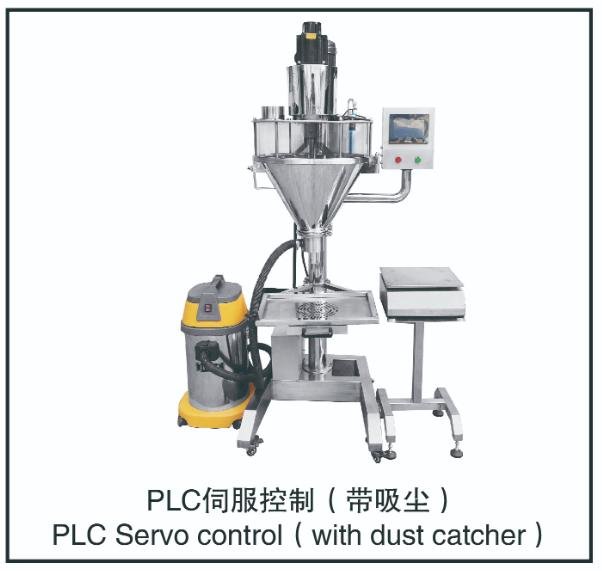
UF-F2D Tabletop Powder Filling Machine
The UF-F2D is designed for compact powder filling applications where a tabletop machine is preferred.
It may be worth considering for:
- Small-batch powder packaging.
- Laboratory or pilot-scale packaging operations.
- Businesses with limited production space.
- Applications requiring a compact auger filling machine.
The filling range must be confirmed against the specific auger configuration and product characteristics. For a target weight of 250 g, customers should verify the machine’s actual maximum filling capacity before ordering.
UF-F2 Semi-Automatic Auger Filling Machine
The UF-F2 was recommended for the customer’s original 100–250 g requirement.
The proposed configuration included features intended to address powder leakage, dust control, and cleaning convenience.
Potential applications include:
- Vitamin and nutritional powders.
- Fine chemical powders.
- Cosmetic and personal-care powders.
- Powder filling into jars, bottles, and other suitable containers.
- Small- to medium-batch powder packaging.
The final machine configuration should be selected according to the target weight, container dimensions, material behavior, and required production output.
Easy-Clean Hopper: An Important Feature for Sticky Powder Filling
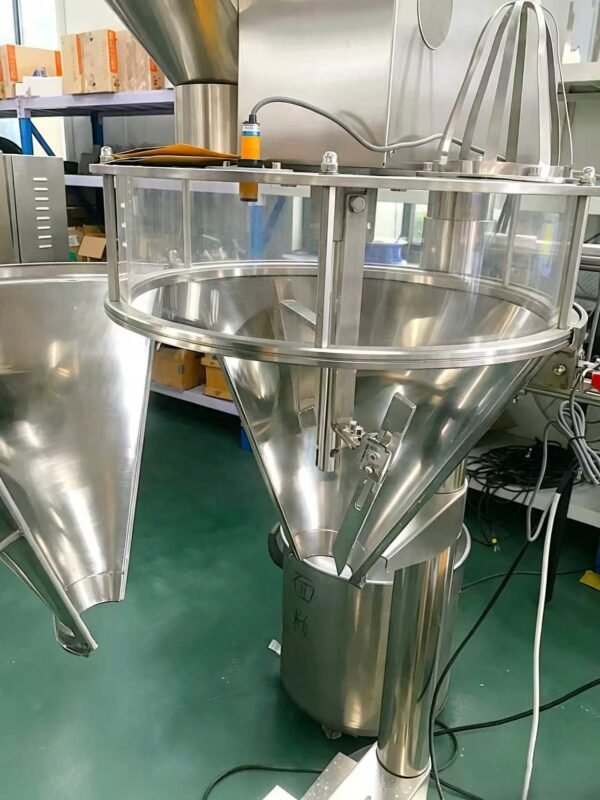
For the Australian customer, easy cleaning was one of the most important equipment requirements.
Sticky vitamin C powder can adhere to the hopper and other product-contact surfaces. If residues remain after a production run, cleaning and product changeovers can become more time-consuming.
To address this concern, UF proposed an easy-clean hopper with a polished surface and a buckle-style design that allows convenient removal.
Key considerations include:
- Removable construction: Makes it easier to access the hopper for cleaning.
- Polished surfaces: Help facilitate the removal of adhering powder.
- Convenient reassembly: Supports routine cleaning and maintenance.
- Leakage prevention: The proposed hopper design incorporates features intended to help prevent material leakage.
For businesses packaging vitamin C powder, cosmetic powders, nutritional ingredients, or other sticky materials, a removable hopper can be an important factor in day-to-day operation.
However, cleaning procedures should always be matched to the material’s properties and the manufacturer’s instructions. If a process requires validated sanitation or specific washdown conditions, these requirements should be confirmed before choosing the machine.
Preventing Powder Leakage and Reducing Dust
Fine powder filling can create two separate challenges: unwanted material leakage and airborne dust.
These problems require different considerations when configuring a powder filling machine.
Free-Flow Device to Help Prevent Leakage
For the customer’s vitamin C powder application, UF proposed a free-flow device intended to help prevent material leakage.
The suitability of this device depends on how the powder behaves during and between filling cycles. Material flow, auger design, and nozzle configuration should be assessed together.
Dust-Proof Device for Cleaner Filling
UF also proposed a dust-proof device to help collect powder dust generated during filling.
Dust control is particularly relevant when handling fine powders because airborne material may affect the cleanliness of the working area and the surrounding equipment.
The appropriate dust collection arrangement depends on the powder’s characteristics and the filling process. Additional testing may be necessary for materials that generate significant dust.
A practical powder filling solution should address material leakage, airborne dust, and cleaning as separate but related engineering considerations.
Screw Conveyor Feeder for More Convenient Powder Feeding
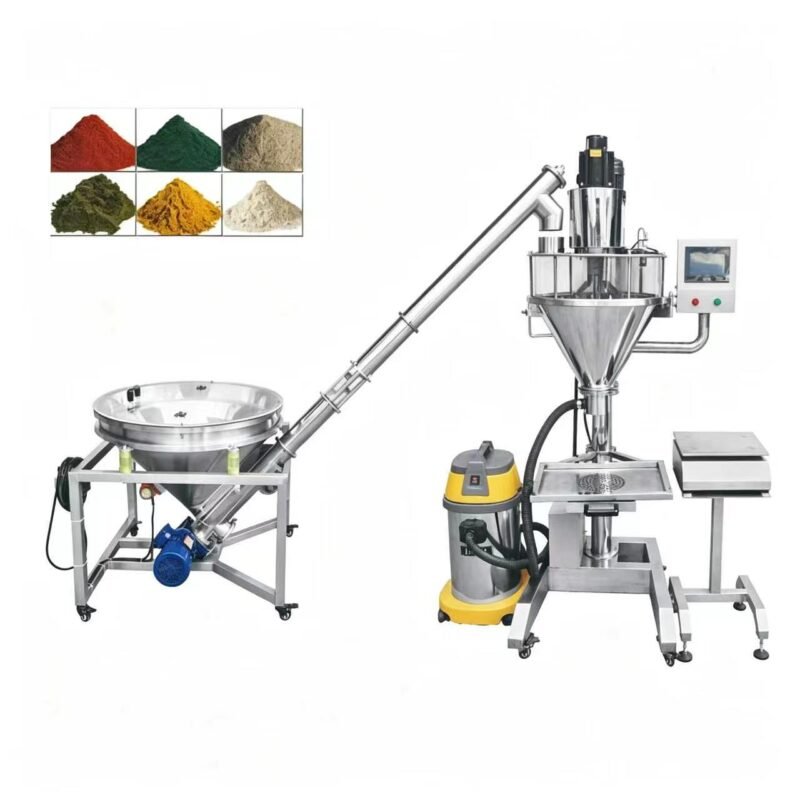
Another option discussed in the project was a screw conveyor feeder.
When a powder filling machine is used repeatedly, the operator may need to replenish the hopper manually. Depending on the production setup and batch size, this can interrupt the filling process.
A compatible screw conveyor feeder can transfer powder into the auger filler hopper, helping reduce manual material handling and maintain a more consistent material supply.
Potential benefits include:
- More convenient powder transfer.
- Reduced need for frequent manual hopper replenishment.
- A more consistent material supply to the filling system.
- Support for repeatable dosing conditions when properly configured.
The screw conveyor feeder is an optional component, so customers can decide whether it is necessary for their current production requirements.
For small-batch operations, a standalone tabletop powder filler may be sufficient. For more frequent production or larger batches, an integrated powder feeding system may be worth considering.
Filling Vitamin C Powder into Jars or Pouches
The packaging container is another important factor in selecting an auger powder filling machine.
During the project discussion, UF asked whether the customer intended to fill jars or pouches and requested the container opening diameter and height.
These dimensions help determine whether the auger filling head needs additional height and which auger size is appropriate.
Before purchasing a vitamin C powder filling machine, it is advisable to prepare the following information:
| Parameter | Information to confirm |
|---|---|
| Product | Vitamin C powder or another powder |
| Target filling weight | 100 g, 200 g, 250 g, or other weights |
| Container type | Jar, bottle, pouch, or another format |
| Container dimensions | Opening diameter and overall height |
| Powder characteristics | Flowability, stickiness, and dust generation |
| Cleaning requirements | Removable hopper and required cleaning procedure |
| Production target | Required containers per minute or per hour |
| Feeding method | Manual feeding or screw conveyor feeding |
Providing these details allows the manufacturer to evaluate the filling range, auger dimensions, filling head clearance, and optional accessories more accurately.
Shipping a Powder Filling Machine to Australia
The customer also requested a quotation that included delivery to Australia and identified Brisbane as the preferred seaport for sea freight.
For international powder filling equipment purchases, the quotation should clarify the transportation method, destination, shipping charges, and applicable documentation.
UF confirmed that shipment to Brisbane could be considered and that a Certificate of Origin could be provided.
The original correspondence also discussed a production lead time of approximately seven working days after payment for the proposed configuration. This was an estimate provided during the 2023–2024 discussions and should not be treated as a current production commitment.
For a new order, buyers should confirm:
- Current machine production lead time.
- Sea freight or air freight availability.
- Destination port or airport.
- Packaging dimensions and gross weight.
- Shipping charges and delivery terms.
- Required export and import documentation.
Planning these details in advance helps buyers compare equipment options and coordinate delivery with their production schedule.
How to Choose an Auger Powder Filling Machine for Your Business
Whether you are packaging vitamin C, nutritional supplements, cosmetic ingredients, or other fine powders, a suitable auger filling machine should be selected based on the actual production application.
Here are five key factors to consider.
- Filling range Confirm that the selected machine and auger configuration can handle your minimum and maximum target filling weights.
- Powder characteristics Fine, sticky, dusty, and free-flowing powders may behave differently during filling. Material testing can help determine the appropriate auger and nozzle configuration.
- Cleaning convenience If the product adheres to contact surfaces or frequent product changeovers are required, consider a removable, easy-clean hopper.
- Dust and leakage control Evaluate whether the application requires a free-flow device, a dust collection accessory, or additional measures based on the product’s behavior.
- Container dimensions The opening diameter and height of jars, bottles, and pouches influence the required filling head arrangement and auger selection.
By reviewing these factors before ordering, buyers can reduce the risk of selecting an unsuitable machine configuration.
Conclusion: A Flexible Powder Filling Solution for Small-Batch Applications
The Australian vitamin C powder inquiry demonstrates why powder filling equipment should be selected according to both the target filling weight and the characteristics of the material.
For this application, UF discussed the UF-P2T tabletop auger filler and the UF-P2 semi-automatic powder filling machine, with particular attention to filling range, easy cleaning, powder leakage prevention, dust collection, and optional screw conveyor feeding.
For businesses looking for a vitamin C powder filling machine, tabletop powder filler, easy-clean auger filling machine, or small-batch powder packaging solution, the first step is to define the product, filling weight, container dimensions, and cleaning requirements.
UF can help evaluate the appropriate machine model and accessories based on your application. Contact UF to discuss your powder filling project and request a customized quotation.
Frequently Asked Questions
What is the best machine for filling vitamin C powder?
An auger powder filling machine is one option for dosing vitamin C powder. The appropriate model depends on the required filling weight, powder characteristics, container type, and cleaning requirements.
Can a tabletop powder filling machine fill 100 g to 250 g?
It depends on the model and auger configuration. In this project, the stated maximum filling weight of the UF-P2T was 200 g, so the 250 g target required further evaluation. Confirm the actual filling range with the manufacturer before ordering.
How do you fill sticky powder without leaving excessive residue?
A suitable auger configuration and an easy-clean hopper can help address material handling and cleaning challenges. For sticky powders, the product should be tested to determine the appropriate equipment configuration and cleaning procedure.
Is an easy-clean hopper important for powder packaging?
Yes, particularly when powder adheres to product-contact surfaces or when frequent cleaning is necessary. A removable hopper with polished surfaces can make routine cleaning more convenient.
Can an auger filling machine reduce powder dust?
A compatible dust collection device can help collect airborne powder generated during filling. The appropriate arrangement depends on the material and operating conditions.
Can the same powder filling machine fill jars and pouches?
Some machines can accommodate different container formats with suitable adjustments or accessories. Container dimensions, filling head clearance, and the way the package is held must be checked first.
Can a screw conveyor feeder be added to a powder filling machine?
A compatible screw conveyor feeder can be integrated with selected auger filling machines to transfer powder into the hopper and reduce manual replenishment.
What information is needed for a powder filling machine quotation?
Provide the powder name, target filling weights, container type and dimensions, desired production output, cleaning requirements, destination, and preferred shipping method.