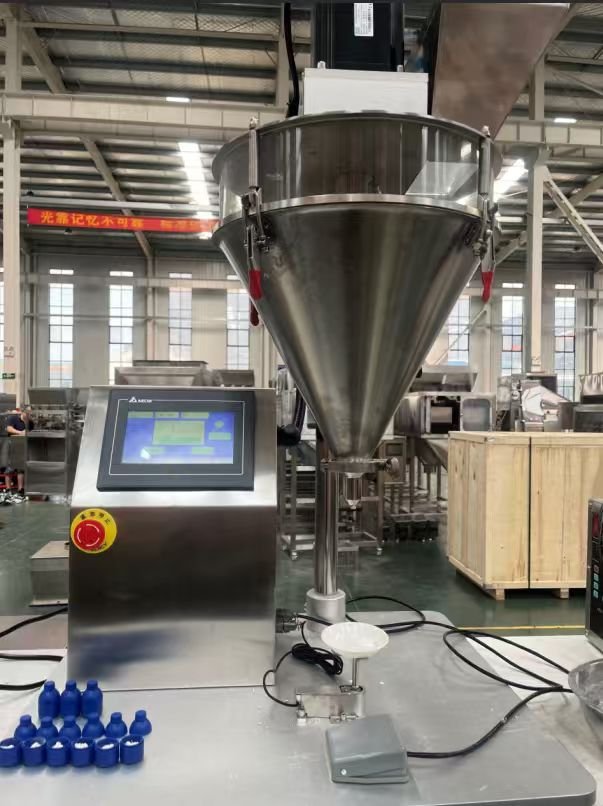
Meta Description : Real after-sales case solving multi-column jelly packaging machine slow heating and cooling downtime. Separate mixing heating tank system restores non-stop packaging, maximizing multi-column machine efficiency vs single-column packaging equipment.
Published Date: June 23, 2026 | Target Industry: Jelly & Pudding Food Processing & Packaging
http://multi-column-jelly-packaging-machine-heating-cooling-solution
Introduction
Food manufacturers choose multi-column jelly packaging machines over single-column models mainly for higher hourly output and non-stop automated packaging. However, one of our overseas clients (Southeast Asia & Europe) encountered severe production downtime after trying to finish full jelly mixing, heating and cooling processes directly inside the machine’s original hopper.
This concise real after-sales case explains the root causes of low production efficiency and our proven split-process solution to restore full continuous operation of multi-column packaging lines.
- Client Original Production Process
The client runs a medium jelly manufacturing plant and purchased our multi-column packaging machine for high-speed jelly filling and sealing. To simplify workshop layout, they adopted an all-in-one in-hopper production process:
- Add jelly powder and water directly into the multi-column machine hopper
- Mix raw materials evenly, heat liquid to95°Cfor gelatinization
- Cool jelly liquid down to 60°C-70°Cfor standard filling
- Start packaging only after temperature meets requirements
As a high-speed packaging device, the multi-column machine is designed for uninterrupted cyclic packaging — but the integrated heating and cooling process completely destroyed this core advantage.
- Key Production Bottlenecks & Losses
Our on-site engineering inspection confirmed two fatal problems caused by overloading the packaging machine hopper:
2.1 Slow Heating & Inefficient Cooling Lead to Long Downtime
The built-in hopper is only designed for material insulation instead of high-power heating and cooling. It takes 40 minutes to heat jelly liquid to 95°C and another 30 minutes for cooling. Every batch requires 70 minutes of standby time before packaging can start.
2.2 Practical Production Losses
- Frequent machine stops, unable to achieve continuous packaging
- Multi-column high-speed advantages fail to work; output even lower than single-column machines
- Unstable material temperature causes inconsistent jelly texture and higher defective rates
- Extra power and labor costs from long idle time
| Core Problem: Packaging machine hoppers are built for filling and insulation, not raw material mixing, heating and cooling. Never use packaging equipment to replace dedicated food processing tanks. |
- Our Optimized Solution: Split Production & Packaging System
We proposed a cost-effective split process to separate raw material pretreatment and packaging work, which eliminates all temperature adjustment downtime completely:
3.1 Updated Production Workflow
- Independent Heating & Mixing Tanks:Finish all pre-processing here — mix jelly powder and water, heat to 95°C for gelatinization, then cool to 60-70°C stably
- Automatic Material Pumping:Transfer qualified constant-temperature jelly liquid to the multi-column machine hopper
- Multi-Column Packaging Machine:The hopper only keeps materials at constant temperature without heating or cooling, supporting 24/7 continuous high-speed packaging
3.2 Core Upgrade Advantage: One Machine Connects Multiple Production Tanks
One multi-column packaging machine can dock with 2-3 independent heating tanks simultaneously. Multiple tanks work alternately to prepare qualified jelly liquid in advance, ensuring the packaging host always has sufficient materials. Zero waiting time maximizes the high-speed packaging capacity of multi-column equipment.
- Efficiency Comparison Before & After Upgrade
| Indicators | Original All-in-One Process | Optimized Split Process |
| Batch standby time | 70 mins | 0 mins |
| Running status | Intermittent stops | 100% continuous running |
| Hourly output | Same as single-column machine | 2.5-3x higher than single-column machine |
| Defective rate | High | Ultra-low |
After the upgrade, the client’s overall production capacity increased by 186%, and the multi-column machine fully exerted its original high-speed packaging performance.
- Why Integrated Heating & Cooling Is Not Suitable for Multi-Column Machines
- Mismatched design functions:Packaging machines focus on filling speed; mixing tanks focus on precise temperature control. Combining both leads to poor performance of both parts
- Affect packaging accuracy:Frequent temperature changes cause liquid viscosity fluctuation, resulting in inaccurate filling volume
- Shorten machine service life:Repeated heating and cooling cycles accelerate aging of electrical components
- FAQ
Q1: Why is my multi-column jelly packaging machine hopper slow to heat up?
Standard hoppers only support insulation, not rapid high-power heating. They are not designed for bulk raw material heating, so integrating heating function will inevitably cause long waiting time.
Q2: Can upgrading hopper cooling system realize continuous production?
No. Limited internal space of the hopper restricts cooling efficiency. The only permanent solution is separating pretreatment and packaging processes.
Q3: Is adding extra heating tanks worthy of investment?
Yes. The extra tank cost can be recovered within 3-4 months, thanks to zero downtime and greatly improved production output.
Conclusion
The biggest value of multi-column jelly packaging machines lies in continuous high-speed packaging. Do not burden the packaging hopper with mixing, heating and cooling work. Matching independent heating mixing tanks is the most efficient and cost-effective solution for jelly production lines.
The one-machine-multi-tanks mode perfectly unlocks full capacity of multi-column packaging equipment, helping food factories cut downtime and boost profits easily.
Call To Action
Troubled by hopper temperature adjustment downtime and low efficiency on your jelly packaging line? Contact our team for free line evaluation and customized solutions for USA, European and Southeast Asian food plants.