For any powder packaging line, unplanned downtime is the biggest drain on productivity and profit. Many common powder packing machine issues do not require a service engineer on site. With basic troubleshooting, operators can locate the root cause quickly and get the line back running in minutes.
Most recurring problems fall into five categories: weighing drift, excessive dust, feeding bridging, bag sealing leaks, and residual material drip after stop. This guide walks you through each issue, explains the likely causes, and gives actionable step-by-step fixes you can apply on site.
1. Weighing Accuracy Drift
Weighing deviation is the most frequently reported issue. It often appears gradually rather than suddenly, and is easy to ignore until it causes batch rejection or customer complaints.
Common causes
- Build-up of caked powder on the weighing platform or load cell mounting
- Loose or damaged load cell signal cable
- Drift in weighing controller calibration after long-term operation
- Uneven equipment footing or vibration from adjacent machinery
- Material build-up inside the screw altering feed characteristics
Troubleshooting steps
- Clean the weighing platform and all around the load cell assembly completely. Remove any spilled powder that may be adding false weight or restricting movement.
- Inspect signal cables for damage, loose connections or shielding issues.
- Perform a zero calibration and test with known test weights.
- Check that the machine frame is level and firmly anchored. Isolate it from strong vibration from nearby equipment if needed.
- Clean the screw and hopper of caked residual material.
Quick fix
Most accuracy drift comes from powder build-up on the weighing assembly. A thorough clean and simple re-calibration will resolve 70% of gradual drift cases without replacing any parts.
2. Excessive Dust During Filling
Increased dust emission not only worsens workshop conditions, but also signals a change in filling performance that will affect accuracy and material loss.
Common causes
- Increased drop distance from filling outlet to material surface
- Worn or damaged bag clamp sealing gaskets
- Weakened dust extraction suction due to clogged filters
- Change in powder bulk density or fineness
- Feeding speed set too high for the material
Troubleshooting steps
- Check the bag clamp silicone seals for wear, cracks or poor fit. Replace if sealing is incomplete.
- Inspect the dust extraction filter and clean or replace it if clogged. Verify suction pressure at the clamp head.
- Confirm that the submerged filling lift mechanism is operating correctly and keeping the outlet close to the powder surface.
- Verify that feeding speed settings match the current material properties.
- Check for gaps or leaks in the hopper or filling tube.
Quick fix
Worn bag clamp seals are the #1 cause of sudden increases in dust leakage. They are low-cost, fast to replace, and should be the first item checked when dust levels rise.
3. Feeding Bridging & Uneven Discharge
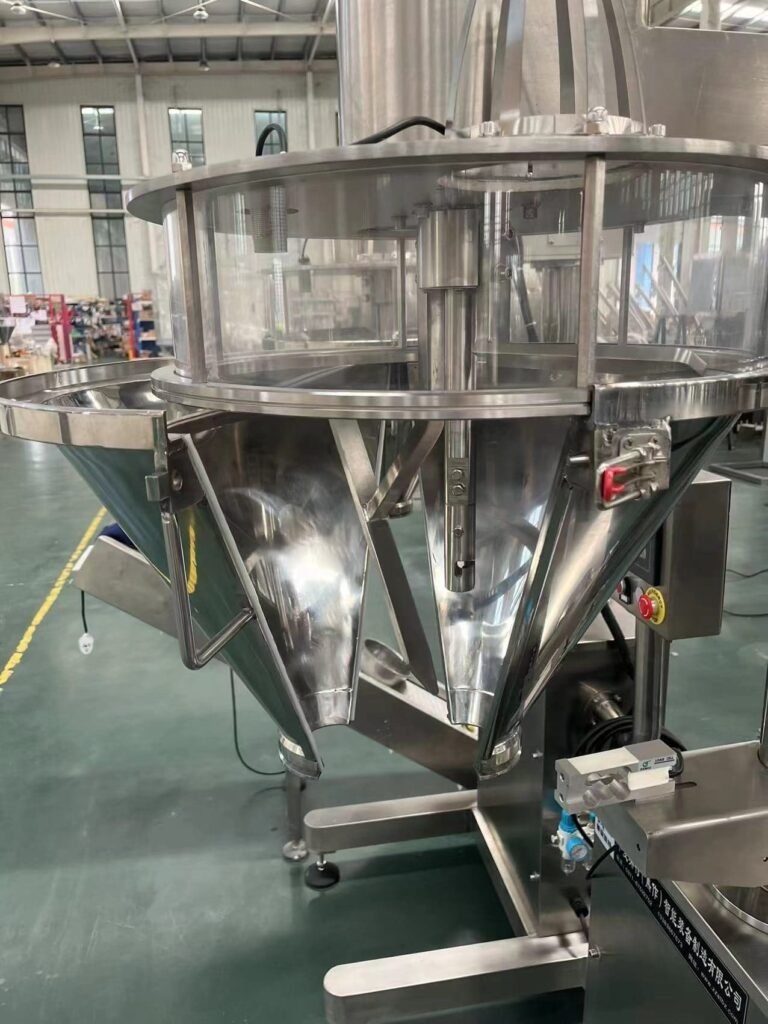
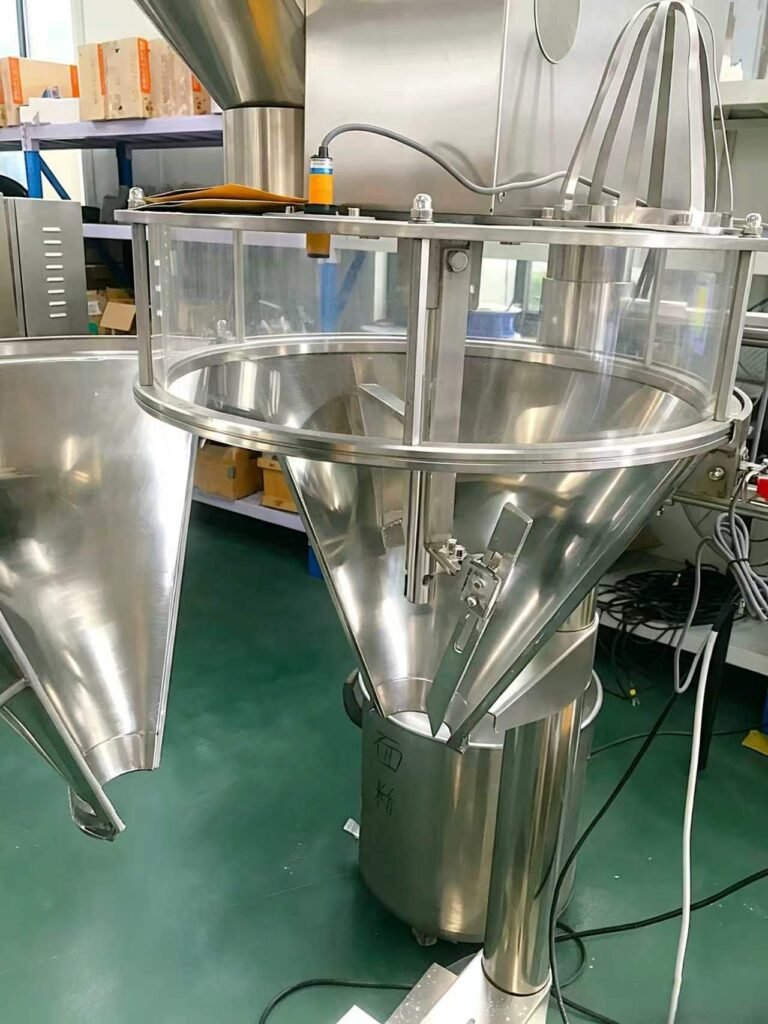
Bridging occurs when powder arches over the hopper outlet, interrupting or stopping material flow. It causes under-weight bags, inconsistent cycle times and can even overload the drive motor.
Common causes
- High moisture content or caking of the powder
- Too low material level in the hopper
- Incorrect agitator operation or broken agitator parts
- Powder type change without adjusting feeding parameters
- Sharp edges or ledges at the hopper outlet
Troubleshooting steps
- Check material level and refill the hopper. Low level increases bridging risk significantly.
- Verify that the arch-breaking agitator is activating correctly during feeding.
- Inspect for caked material inside the hopper and break up or remove if present.
- Confirm that hopper and screw are clean from previous product changeover.
- Adjust screw speed and agitator settings to match current material flow properties.
Quick fix
For occasional bridging, first try raising the hopper material level and running a manual agitator cycle. For recurring issues, verify product changeover cleaning was complete — residual caked powder from a previous batch is a very common trigger.
4. Bag Clamp Leaks & Poor Sealing
Leaking bag clamps cause dust escape, inconsistent bag position and even weighing errors. They are often overlooked as a source of other performance issues.
Common causes
- Worn or hardened silicone sealing pads
- Insufficient clamp pressure from worn pneumatic cylinders
- Misaligned clamp jaws
- Bag thickness or material change
- Debris caught in the sealing surface
Troubleshooting steps
- Clean the clamp sealing surfaces thoroughly. Remove any trapped powder or debris.
- Check pneumatic pressure to the clamp cylinders. Verify it is within the 0.4–0.6MPa operating range.
- Inspect silicone pads for wear, hardening or damage. Replace if compressed or cracked.
- Check clamp alignment and adjust if jaws do not meet evenly.
- Confirm that bag material and thickness have not changed recently.
Quick fix
Most clamp sealing issues come from either dirty seal surfaces or low air pressure. Clean the pads and verify line pressure first before replacing parts.
5. Residual Material Drip After Feed Stop
Dripping powder after feeding stops causes consistent over-weight bags and is one of the most frustrating recurring issues.
Common causes
- Worn or poorly closing discharge valve
- Residual powder trapped in the screw flights
- Slow valve response time
- Screw speed too high at cut-off
- Loss of pneumatic pressure to the shut-off valve
Troubleshooting steps
- Check pneumatic supply pressure to the discharge valve. Low pressure causes slow or incomplete closing.
- Inspect the valve seal for wear or damage. Replace if it does not seat fully.
- Verify valve timing in the control program. Adjust closing advance if needed.
- Reduce final slow-feed speed if material inertia is causing over-run.
- Clean the screw outlet area of caked material that may hold the valve open.
Quick fix
If over-weight drip appeared suddenly, first check valve air pressure and valve seal condition. These two causes account for the majority of residual drip failures.
Preventive Maintenance to Reduce Breakdowns
Most common issues can be avoided with a simple regular maintenance routine:
- Clean hopper, screw and weighing platform after each product changeover
- Inspect and clean dust extraction filters weekly
- Check bag clamp seals every two weeks and replace as needed
- Calibrate weighing system monthly
- Lubricate bearings and pneumatic components on schedule
Final Thoughts
Most powder packing machine downtime does not require expensive service calls or replacement parts. The majority of common issues stem from powder build-up, worn seals, or minor calibration drift — all of which can be resolved quickly by on-site staff.
Working through this troubleshooting checklist systematically will help you get production back online fast, and reduce the frequency of recurring issues.
If you are facing a persistent issue that basic troubleshooting cannot resolve, or need spare parts and technical support for your powder packing line, our service team can provide remote diagnostics or on-site assistance. Contact us today for fast technical support.