How to Reduce Changeover Time on Powder Packaging Lines
For powder manufacturers running multiple products or pack sizes, changeover time is one of the largest hidden drains on productivity. It is not unusual for lines to lose 30–60 minutes of production every time they switch SKUs — and for factories running 3+ changeovers per day, that adds up to hundreds of hours of lost output every year.
Many operations accept long changeovers as an unavoidable part of multi-product production. In reality, most changeover time is waste that can be eliminated with structured improvement and the right machine design. This guide applies SMED (Single-Minute Exchange of Die) principles to powder packaging lines, and shares practical ways to cut changeover time dramatically without sacrificing accuracy or cleanability.
The Real Cost of Long Changeovers
Changeover time does not just mean lost output. It creates multiple layers of cost:
- Lost production capacity: Every minute the line is not running is output you can never recover.
- Material waste: Startup scrap, purge material and first-piece rejection add to waste per changeover.
- Labor cost: Operators and technicians spend valuable time on setup instead of production.
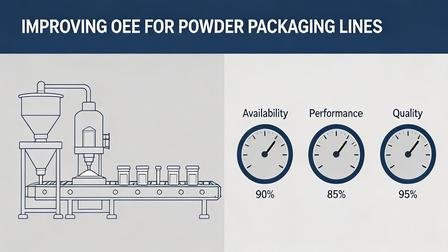
- OEE erosion: Frequent long changeovers are one of the largest drags on overall equipment effectiveness.
For a typical line running 3 changeovers per day, reducing changeover time from 45 minutes to 15 minutes adds roughly 600+ hours of additional production per year — with no extra equipment or labor.
What Actually Takes Time During a Powder Packaging Changeover
Before you can reduce changeover time, you need to understand where the time goes. On most auger filling lines, changeover breaks down into four categories:
1. Preparation & Parts Gathering
Getting tools, spare screws, new packaging materials and cleaning supplies ready after the line has already stopped. This is almost 100% waste and can be eliminated entirely.
2. Mechanical Change Parts
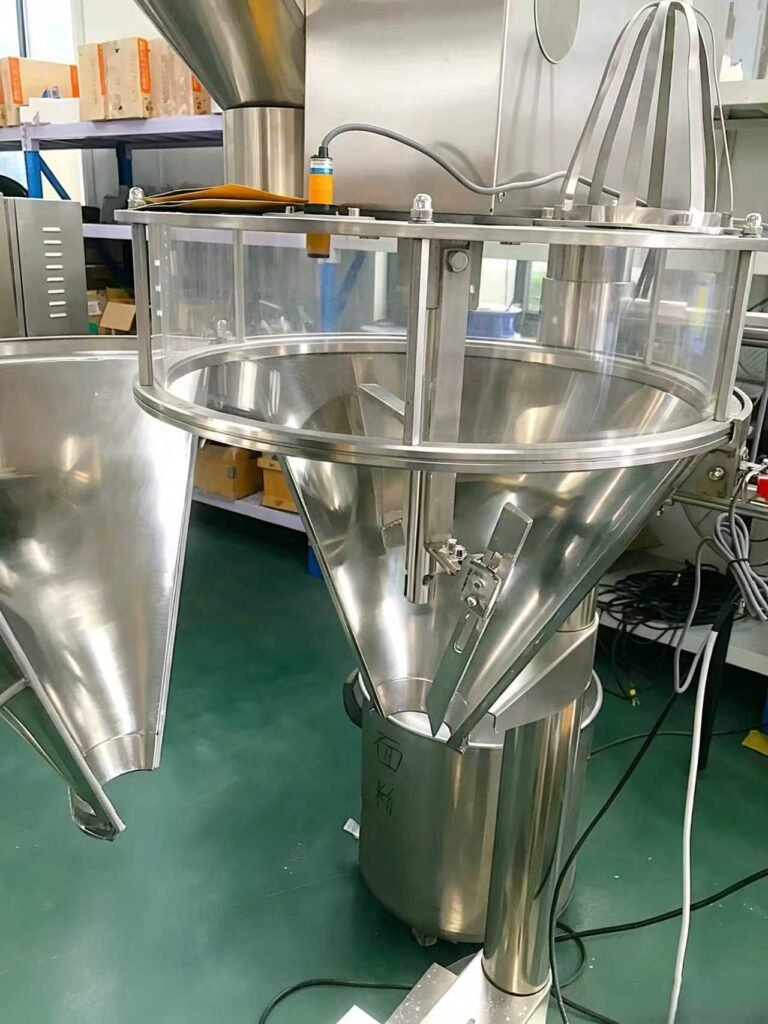
Swapping auger screws, filling tubes, hopper inserts and forming collars for different products and pack sizes.
3. Cleaning & Product Removal
Removing residual powder from product contact parts, especially between dissimilar products or allergen-containing materials.
4. Adjustment, Calibration & Trial Runs
Setting parameters, adjusting fill weights, testing seals and running trial packs until the line produces good product.
Practical Solutions to Cut Changeover Time
1. Move All Preparation Work External (Biggest Single Gain)
The core principle of SMED is that anything that can be done while the line is still running should be done before it stops.
- Stage all parts and tools at the machine before the current run ends. Have the next screw, filling tube, seals and tools on a cart ready at the station.
- Pre-stage packaging materials and film rolls near the machine.
- Pre-heat sealers and adjust temperatures while the last packs are running.
- Assign a changeover team so one operator finishes the current run while another prepares the next product.
This single step typically reduces changeover time by 30–40% on most lines, with no equipment modification at all.
2. Upgrade to Tool-Free Quick-Change Design
Mechanical changes should not require tools, disassembly time or fasteners.
- Use tool-free auger screw release with quick-disconnect couplings. Screw changes should take seconds, not minutes.
- Install quick-release hopper sections and filling tubes with clamp connections instead of bolted fittings.
- Use one-touch forming collar adjustment for different bag widths.
- Standardize on common mounting interfaces across all products.
Lines with tool-free design typically complete mechanical part changes in under 5 minutes, compared to 20–30 minutes with traditional bolted construction.
3. Standardize Recipes & Eliminate Manual Adjustment
Most adjustment and trial run time is unnecessary with modern controls.
- Store proven product recipes in the machine control system. Each product recalls exact screw speed, fill weight, seal temperature and timing settings.
- Use one-touch product selection so operators simply pick the next product from a menu instead of re-entering parameters.
- Calibrate from a known reference instead of starting from zero each time.
Recipe storage cuts adjustment and trial run time by 70% or more, and produces consistent quality from the first bag.
4. Optimize Cleaning Procedures
Cleaning is often the longest part of a powder changeover, especially between dissimilar products.
- Use split hopper design and fully removable product contact parts for complete access.
- Implement a structured cleaning checklist with defined steps, tools and acceptance criteria.
- Use vacuum cleaning first, then wipe instead of disassembly for simple product changes.
- Group similar products in the production schedule to minimize cross-contamination risk and reduce required cleaning depth.
For non-allergen product changes, optimized cleaning procedures can often be completed in under 10 minutes.
Typical Changeover Time Improvement Path
| Stage | Typical Time | Improvement Action |
|---|---|---|
| Current state | 45–60 minutes | Baseline measurement |
| External preparation | 30–40 minutes | Move prep work offline |
| + Quick-change parts | 15–20 minutes | Add tool-free disassembly |
| + Recipe storage | 8–12 minutes | Add on-board recipe control |
| + Optimized cleaning | 5–8 minutes | Standardized cleaning procedures |
Best-in-class multi-product powder packaging lines achieve under 10 minute changeovers with this structured approach.
Common Changeover Mistakes to Avoid
- Waiting until the line stops to start preparing. This is the single largest source of wasted changeover time.
- Changing more parts than necessary. Use the same screw and forming set for similar products where possible.
- Trial-and-error adjustment instead of proven recipes. Every minute spent adjusting is unnecessary waste.
- Over-cleaning between similar products. Match cleaning depth to actual contamination risk, not a one-size-fits-all procedure.
Final Thoughts
Long changeover times are not a fact of life for multi-product powder packaging. They are mostly the result of poor preparation, outdated machine design and unstructured procedures — and most of that time can be eliminated.
You do not need a new machine to see dramatic improvement. Start by moving preparation work external, then add quick-change features and recipe control as your budget allows. Even modest reductions in changeover time deliver large gains in annual output and OEE.
If you are dealing with long changeovers on your powder packaging line, or want to know how quick-change machine design could improve your output, our engineering team can review your operation and recommend a prioritized improvement plan. Contact us today for a changeover efficiency assessment.