Screw Metering Machine Maintenance & Cleaning Guide | GMP Compliant
Most factory managers notice the same pattern: a brand new screw metering machine delivers tight, consistent accuracy for the first 6 to 12 months. Then slowly, fill weights drift, powder starts leaking from seals, and the machine jams more often. Many blame poor build quality. In our field experience, 80% of these issues come from skipped or improper maintenance — not the machine itself.
The time you spend on routine maintenance is always less than the cost of unplanned downtime, rejected batches and failed GMP audits. This guide breaks down a practical, field-tested maintenance routine, GMP-compliant cleaning procedures, common troubleshooting and a wear parts schedule you can implement today.
Why Routine Maintenance Matters
It is not just about keeping the machine running. It is about protecting your core production metrics:
- Stable accuracy: Worn screws and degraded seals are the top cause of slow accuracy drift. Regular adjustment and replacement keeps fill error within spec.
- Less unplanned downtime: A 10-minute daily check can catch a worn seal or loose bearing before it causes a 4-hour production stop.
- Longer equipment life: Proper maintenance extends screw and machine service life by 30–50%.
- GMP audit compliance: Clean, documented maintenance and cleaning records are a core requirement for GMP and food safety audits.
Tiered Maintenance Checklist
Build this into your production schedule. Do not rely on “fix it when it breaks”.
Daily Checks (5–10 minutes per shift)
- Inspect all sealing points for powder leakage; replace seals at the first sign of seepage
- Listen for abnormal noise or vibration from the screw drive and bearings
- Check hopper feed condition; clear any bridging before it causes empty cycles
- Verify fill weight with a 10-bag sample test; record results
- Wipe down exterior surfaces and remove spilled powder
Weekly Checks (20–30 minutes)
- Tighten loose fasteners on screw flange, hopper and frame
- Inspect screw flight surface for wear or scratches
- Clean dust and powder residue from control cabinet and motor vents
- Check feeder and agitator operation for smooth performance
Monthly Checks (1–2 hours)
- Inspect bearing play; lubricate per manufacturer specification
- Check servo drive parameters and calibration stability
- Inspect all wear parts for remaining service life
- Verify safety switches and emergency stop function
Field note: Keep a written maintenance log. GMP auditors will ask for records, not just verbal confirmation.
GMP-Compliant Cleaning Procedure
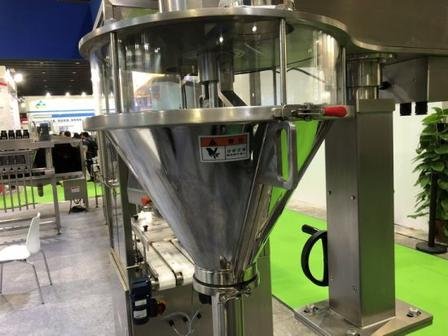
Cleaning is not just wiping it down. For food-grade production, it must be validated, residue-free and documented.
Standard Product Changeover Clean
For switching between flavors or products of the same type:
- Run empty until no more powder discharges from the screw
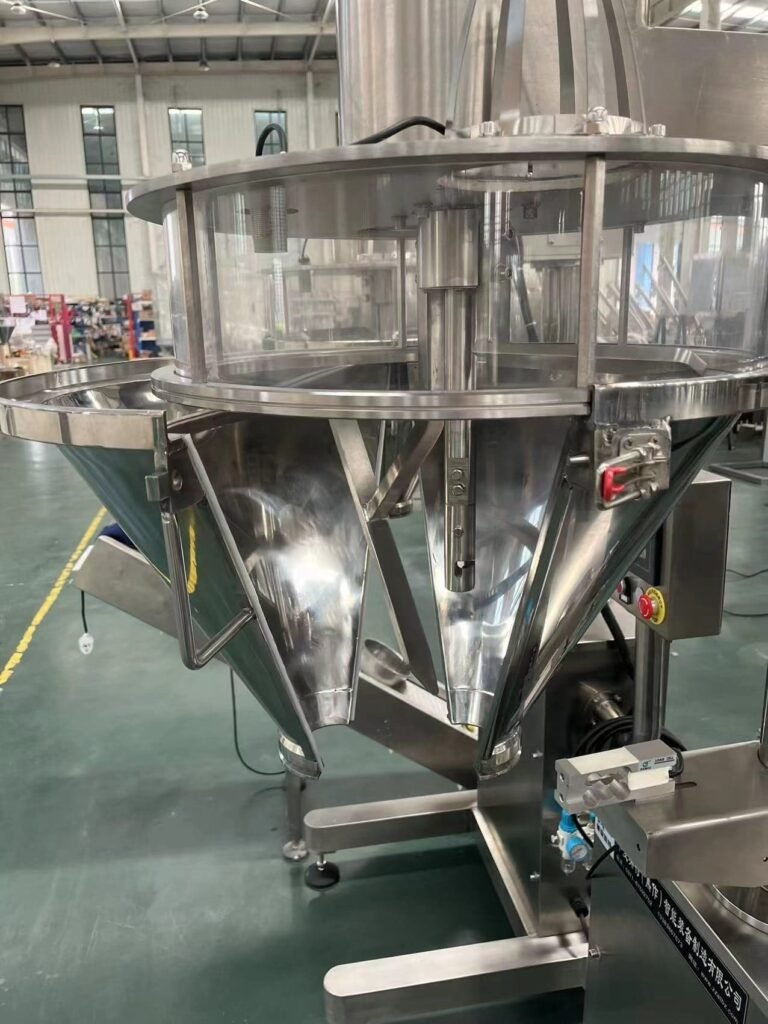
- Disassemble hopper, screw, seal and all product-contact parts
- Wipe with food-grade detergent and soft nylon brush — never use steel wool. It scratches surfaces and traps powder permanently
- Rinse with potable water; wipe dry with lint-free cloth
- Inspect for hidden residue and reassemble
- Record cleaning in the batch log
Deep Clean (Every 2 weeks / after allergen runs)
For full sanitation and GMP compliance:
- Full disassembly of all product-contact parts, including feeder screw
- Wash with approved alkaline cleaner; rinse thoroughly
- Sanitize with food-grade sanitizer; air dry completely
- Inspect all seals and gaskets; replace if damaged or swollen
- Perform swab test for residue validation if required
- Sign off cleaning record with operator and supervisor
Critical detail: Do not forget to clean the screw feeder and transfer line. Many factories clean only the filling head and leave old powder in the conveyor, causing cross-contamination and failed audits.
Common Troubleshooting Table
| Issue | Likely Cause | Solution |
|---|---|---|
| Fill weight slowly drifting | Screw flight wear; material density change; worn seal | Recalibrate first; inspect screw edges and seals |
| Powder leaking from bottom seal | Worn or misaligned silicone seal | Replace with food-grade seal; check flange alignment |
| Screw jams or binds | Hopper bridging; foreign object; bent screw | Clear hopper; inspect screw for damage |
| Increased vibration / noise | Worn bearing; loose mounting; drive misalignment | Inspect bearings; tighten fasteners; realign drive |
| Inconsistent fill per cycle | Unstable feed; low hopper level | Maintain steady hopper level; check agitator function |
Wear Parts Replacement Schedule
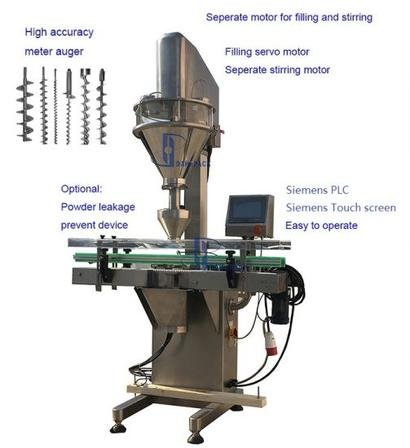
Do not wait for complete failure. Planned replacement is cheaper than emergency downtime.
| Part | Typical Service Life | Replacement Note |
|---|---|---|
| Food-grade silicone seal | 3–6 months | Replace at first sign of leakage; always keep spares on site |
| Auger screw | 3–5 years | Replace when flight wear exceeds 0.5mm or accuracy drops by 50% |
| Drive bearings | 2–3 years | Replace at first sign of play or unusual noise |
| Gear oil / drive belt | 1 year | Follow manufacturer specification |
Industry pitfall: Some factories buy cheap non-food-grade seals to save money. They leak faster, leach chemicals into product, and fail GMP audits. Always use food-grade silicone seals from a known supplier.
Real Project Case: Seasoning Plant Maintenance Overhaul
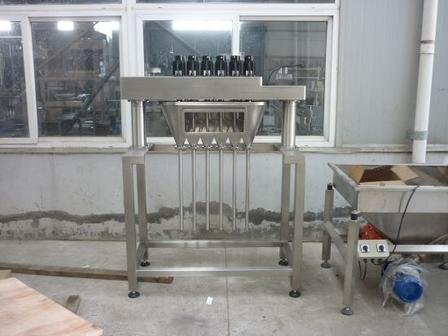
Client Background
A seasoning manufacturer in Shandong, China, producing multiple spice blends in 50g and 200g pouches. They had no formal maintenance schedule. Operators only fixed things when they broke. Core problems: 2–3 unplanned downtime events per month, typically 4 hours each; regular powder leakage; GMP audit failed twice on cleaning and residue issues; accuracy drifted to ±1.8%.
Solution Implemented
We helped them build a formal tiered maintenance system:
- Daily 10-minute shift checks with weight verification
- Weekly full inspection and minor cleaning
- Bi-weekly deep clean with GMP documentation
- Scheduled wear part replacement on a 6-month seal / 3-year screw cycle
- Operator training on proper disassembly and cleaning procedure
Results
- Unplanned downtime reduced by 82%, from 10+ hours per month to under 2 hours
- Filling accuracy stabilized back to ±0.3% to ±0.5%
- Passed GMP audit on first attempt after implementation; cleaning validation fully approved
- Extended average screw service life by 1.2 years
Client Feedback
“We used to run the machines until something broke, then rush to fix it. We lost so much production time and wasted so much spice from overfill. The scheduled routine costs us 30 minutes a day, but saves us days of downtime every month. The GMP audit was the easiest we’ve ever had.” — Production Supervisor Wang (discretionary)
Frequently Asked Questions
How often should I clean my auger filler for food production?
For same-product continuous runs, a full deep clean every 2 weeks is standard. For product changeovers, do a full contact-parts clean every time. For allergen products, you must complete a full validated clean between runs.
Can I wash the screw metering machine with water directly?
You can wash product-contact stainless steel parts with water and approved detergent. Do NOT spray water directly into the motor, control cabinet, servo drive or bearings. Water damage to electrical components will void warranty and cause expensive failures.
How do I know when the auger screw needs replacing?
Two clear signs:
- You recalibrate properly, but accuracy is still twice as bad as when the machine was new
- Visual inspection shows 0.5mm or more of wear on the screw flight edges If you see either, plan replacement soon. Do not wait for complete failure.
What cleaning chemicals are approved for GMP food equipment?
Use only food-grade, pH-neutral detergents and sanitizers approved for food contact surfaces. Avoid abrasive cleaners, bleach and chlorine-based products — they can corrode stainless steel and leave toxic residue.
Can our in-house operators do maintenance and cleaning?
Yes, for daily checks, cleaning and seal replacement — as long as they are properly trained. For bearing replacement, drive alignment and servo parameter adjustment, we recommend working with a qualified technician.
Summary
A screw metering machine is only as good as the maintenance it gets. Good accuracy, long service life and GMP compliance are not one-time purchases — they come from consistent daily care, scheduled replacement of wear parts and proper cleaning procedures.
If you are struggling with drifting accuracy, start with our guide to improving powder filling accuracy to rule out setup and material issues. For help sizing the right machine for your product, refer to our screw metering machine selection guide.
In our next article, we cover complete turnkey powder packaging lines — how to build a fully automated system from raw material intake to finished product discharge.
Uniflow Packaging Machinery | Food-grade powder filling equipment and field service. Follow our [LinkedIn] for factory case studies and industry insights, or subscribe to our [YouTube channel] for machine operation, maintenance and calibration tutorials.
Contact our engineering team for a maintenance audit of your existing filling line.