Turnkey Powder Packaging Line Guide: Build Your Automated Food Powder Line
Many factories try to save money by sourcing individual machines and assembling the line themselves. In our field experience, nearly 60% of our retrofit clients did this first. The result: mismatched interfaces, incompatible control signals, 30% lower output than rated, and every supplier blaming the others when something breaks. Total retrofit costs end up higher than a turnkey line.
For food powder production, a properly engineered turnkey line almost always delivers lower total cost, faster startup and more reliable compliance. This guide breaks down what goes into a complete line, how to plan it correctly, and the pitfalls to avoid.
Why Choose a Turnkey Line Over Self-Built Assembly
It is not just about convenience. It is about total cost and risk:
- Single point of responsibility: One supplier owns design, assembly, commissioning and after-sales. No finger-pointing between feeder, filler and sealer vendors.
- Faster startup: Standard turnkey lines commission on site in 3–7 days. Self-built lines often take 1–3 months of debugging and modification.
- Guaranteed performance: Output and accuracy are guaranteed as a complete system, not just individual machines.
- Simplified GMP compliance: One set of documentation, one sanitary design standard, one supplier supporting audit preparation.
Field experience: The most common retrofit request we get is self-built lines where every machine works fine on its own, but together they only hit 70% of the target capacity.
Core Modules of a Complete Food Powder Packaging Line
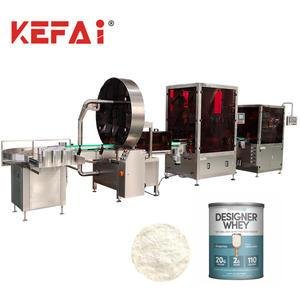
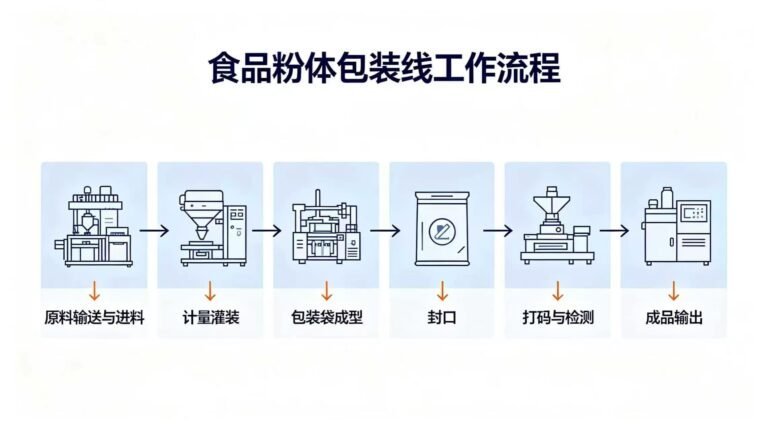
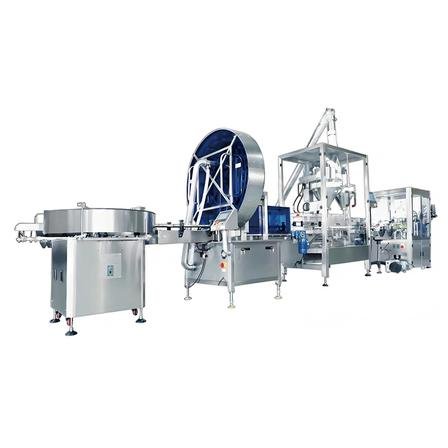
A full turnkey line is more than just a filling machine. It is a matched system from raw material intake to finished case.
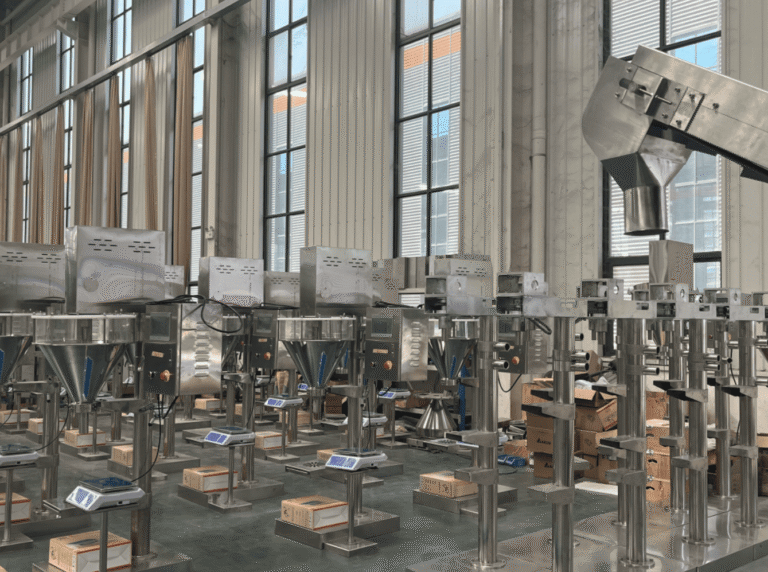
1. Raw Material Conveying & Feeding Section
Delivers powder from bulk storage to the filling hopper, fully enclosed.
- Vacuum feeder: for fine, dusty powders and multi-point feeding; clean, minimal dust
- Screw conveyor: for dense, abrasive powders; lower cost for simple transfer
- Includes hopper level control for consistent feed to the filler
2. Metering & Filling Core Section
The heart of the line. For food powder, this is almost always a servo screw metering system.
- Matched screw design for your specific powder properties
- Servo drive for accurate, repeatable dosing
- Integrated dust extraction port for fine powders
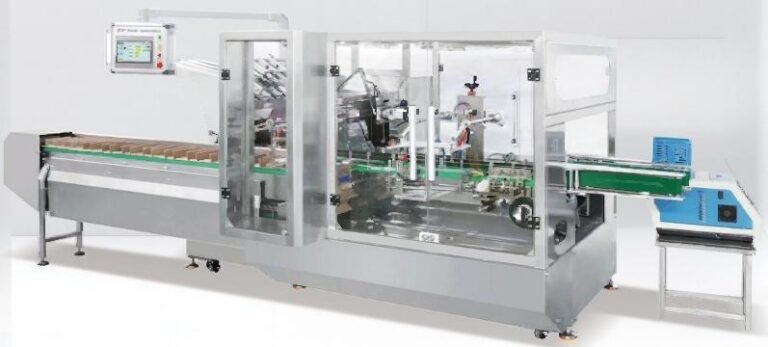
3. Package Forming Section
Forms and seals the final package.
- VFFS bagger: for pillow bags, stand-up pouches, gusseted bags; most versatile for food powder
- Jar / can filling line: for rigid containers; includes bottle unscrambler and screw capper
- Seal quality is critical for powder products — must prevent leakage and moisture ingress
4. Post-Filling Inspection & End-of-Line Section
Quality control and final packaging.
- Checkweigher: 100% weight inspection, automatic rejection of out-of-spec packs
- Date / batch coding printer
- Metal detector (required for most food safety standards)
- Optional case packer and palletizer for full automation
5. Central Control System
One HMI controls the entire line.
- Centralized recipe management: save parameters for each product, one-click changeover
- Production data logging: output, error rate, downtime tracking
- Alarm and fault diagnosis
4 Core Planning Principles (Avoid Costly Rework)
1. Size capacity with 20% headroom
Do not size the line exactly to your current output. Build in 20% spare capacity for peak seasons, new products and future growth. Lines run more reliably at 80% load than at 100%.
2. Match the line to your material, not the other way around
Fine light cocoa powder flows completely differently from dense flour. Screw design, feeder type and bagger speed all depend on your powder. Always test with your actual product before finalizing the design.
3. Build for your compliance level from day one
If you need GMP or BRC certification, build it in from the start. Retrofitting sanitary welds, quick-release connections and 316L stainless steel later costs 2–3 times more.
4. Prioritize changeover speed for multi-product lines
If you run 5+ flavors or SKUs, quick-release design is not optional. Hours of changeover time per batch eat into capacity far more than a slightly slower machine.
《7 Ways to Improve Powder Filling Accuracy》
Common Pitfalls to Avoid
- Choosing on machine price only: The cheapest filler will cost you far more in downtime, waste and poor accuracy over 5 years.
- Ignoring operator ergonomics: A line that is hard to load, clean or adjust will be run poorly by operators.
- Skipping the checkweigher: 100% weight inspection pays for itself in reduced material waste and avoided compliance fines.
- Under-sizing the conveyor: The feeder and conveyor must keep up with the filler, or the line will starve and output will drop.
Real Project Case: Spice Powder Turnkey Line Installation
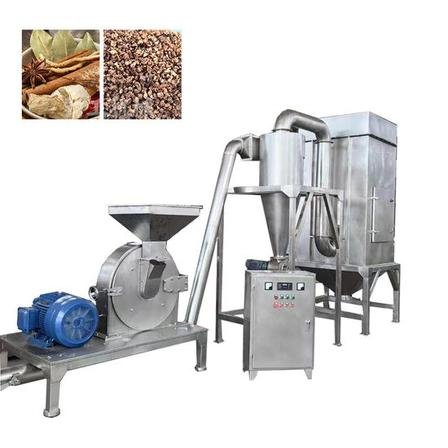
Client Background
A spice manufacturer in Shandong, China, producing five-spice powder, white pepper and other seasonings in 50g and 100g pouches. They previously ran 3 semi-automatic lines with manual feeding and manual bag handling, 18 operators across two shifts. Core pain points: unstable output, slow product changeovers, high dust exposure, repeated GMP audit findings, inability to meet peak season orders.
Core Requirements
- Single-shift output of 15,000 bags (100g size) minimum
- Full food-grade GMP-compliant design
- Product changeover and cleaning under 1 hour
- Single-supplier turnkey delivery, commissioning and warranty
Our Solution
One complete turnkey powder packaging line including:
- Vacuum powder feeder with hopper level control
- 30L servo screw metering machine with fine-powder optimized screw
- VFFS bagging machine with pouch former
- Checkweigher with automatic rejection
- Inkjet date coder
- Central control cabinet with recipe management
- All product-contact parts in 304 stainless steel, mirror-polished welds, tool-less quick release
Results
- Output: stabilized at 18,000 bags per shift — 125% increase over previous semi-automatic lines
- Labor: reduced from 18 to 4 line operators per shift, saving approximately ¥800,000 per year in labor costs
- Changeover: 45 minutes per product switch, including cleaning
- Commissioning: 6 days on-site installation and commissioning — roughly 2 months faster than the client’s previous self-built line experience
- Compliance: passed GMP audit on first attempt
Client Feedback
“We thought turnkey would be more expensive. But when you add up the debugging costs, rework costs and two extra months of production, it actually saved us money. And having one contact for everything is so much simpler. We don’t have to call three different suppliers to figure out who’s at fault.” — Production Director Zhang (discretionary)
Frequently Asked Questions
Is a turnkey line more expensive than buying machines separately?
On paper, equipment cost may be 5–10% higher. But when you factor in engineering time, on-site debugging, retrofit work, lost production during startup and single-source warranty, total cost is almost always lower with a turnkey solution.
What is the typical lead time for a turnkey powder packaging line?
Standard food powder lines: 4–6 weeks from order confirmation to shipment, plus 3–7 days on-site installation and commissioning. Customized or high-capacity lines take longer.
Can we keep some of our existing equipment?
Yes. We do many retrofit projects where we integrate existing fillers, baggers or conveyors into a new turnkey control system. It depends on condition and compatibility, but it is often a good way to maximize existing investment.
Does a turnkey line guarantee passing GMP audit?
Our lines are designed to GMP sanitary standards, and we provide full documentation: material certificates, cleaning validation protocols, equipment verification files. We support clients through the audit process. Over 95% of our turnkey projects pass GMP audit on the first attempt.
Summary
A turnkey powder packaging line is not a premium luxury. For most food powder producers, it delivers lower total cost, faster startup, more reliable performance and simpler compliance compared to piecing machines together yourself.
Plan around your actual material properties, build in capacity headroom, and design for your compliance level from the start — and you will avoid 90% of the most common problems.
For help with the filling core of your line, see our screw metering machine selection guide. For maintenance best practices to keep your line running, refer to our screw metering machine maintenance guide.
Uniflow Packaging Machinery | Turnkey food powder packaging lines, custom engineered for your product and capacity. Follow our 【LinkedIn】 for more factory case studies, or subscribe to our 【YouTube channel】 for line operation and maintenance tutorials. Contact our engineering team for a free line layout and quotation.