Semi-Automatic Powder Filling Machine for a German Customer: UF–F2 with Three Auger Screws
How UF helped a German customer find a flexible powder filling solution with multiple filling ranges, dust control, and an integrated screw feeding system.
Project Overview
When packaging powders, manufacturers and distributors often face several challenges: handling different filling weights, maintaining consistent dosing accuracy, controlling airborne dust, and ensuring efficient material feeding.
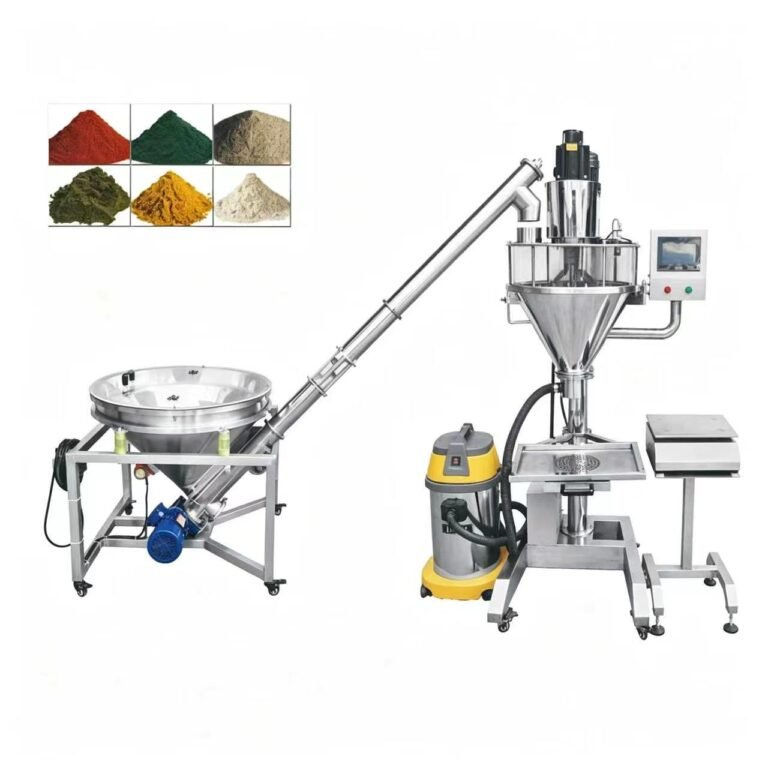
In September 2024, UF received an inquiry from a customer in Germany looking for a semi-automatic powder filling machine capable of handling multiple filling ranges. The customer required three interchangeable auger screws, a dust control solution, and a screw conveyor feeder to create a practical powder filling system.
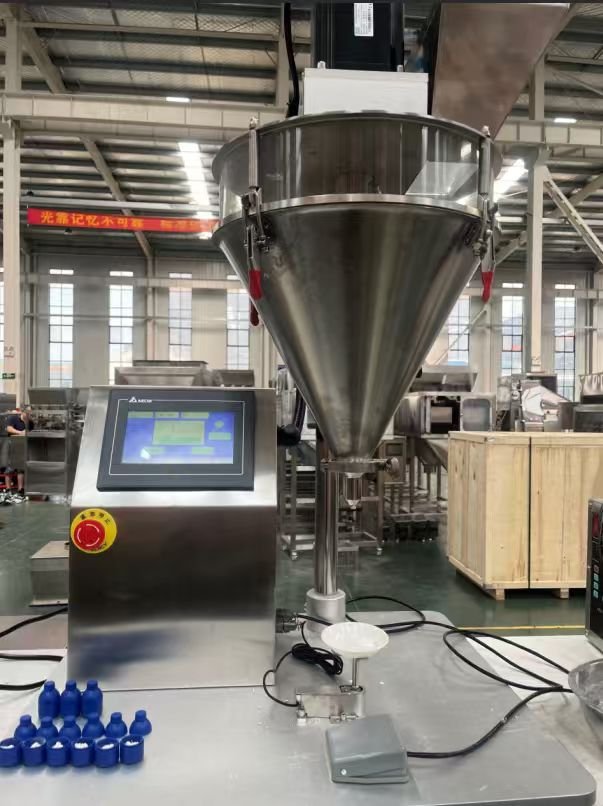
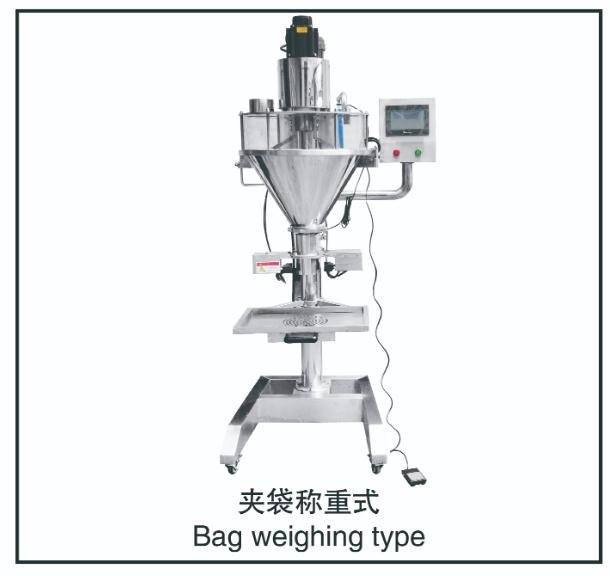
After discussing the equipment configuration, filling methods, and transportation options, UF recommended the UF–F2 semi-automatic auger powder filling machine, equipped with a Delta PLC touchscreen, a servo motor, and a screw conveyor feeding system.
This project demonstrates how selecting the right machine configuration can help businesses improve flexibility and meet different powder packaging requirements.
- The Customer’s Requirements
The customer required a powder filling machine with three filling ranges to accommodate different package weights.
The main requirements included:
- Three interchangeable auger screws:500–1,000 g, 1,000–3,000 g, and 3,000–5,000 g.
- Dust control:A dust-proof device around the filling nozzle to help reduce powder escaping during filling.
- Automatic material feeding:A screw conveyor feeder to transfer powder into the filling hopper.
- Flexible filling methods:The ability to select volume-based or weight-based filling.
- Convenient operation:A user-friendly control system with a German-language interface.
- Delivery planning:A clear production lead time and available shipping options to Germany.
These requirements called for more than a basic auger filler. The customer needed a configuration that combined flexible dosing, reliable controls, and practical dust management.
- The Recommended Solution: UF–F2Auger Powder Filling Machine
UF recommended the F2 semi-automatic powder filling m
achine with a configuration designed around the customer’s application.
Three Interchangeable Auger Screws
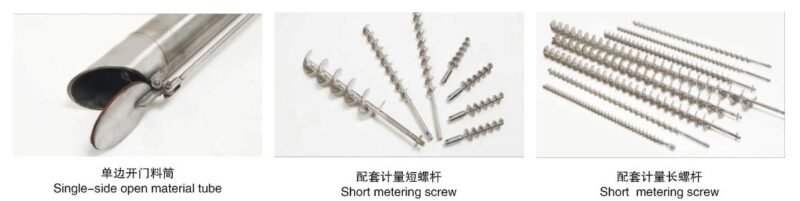
Different filling weights require appropriate auger configurations. For this project, the machine was configured to accommodate three filling ranges:
| Auger screw | Filling range |
| Screw 1 | 500–1,000 g |
| Screw 2 | 1,000–3,000 g |
| Screw 3 | 3,000–5,000 g |
By changing the auger screw according to the target filling weight and powder characteristics, the customer can use one machine for multiple filling applications.
Actual filling performance depends on the powder’s density, flowability, and other material characteristics. Product testing is recommended to determine the most suitable auger configuration and operating parameters.
Delta PLC Touchscreen and Servo Motor
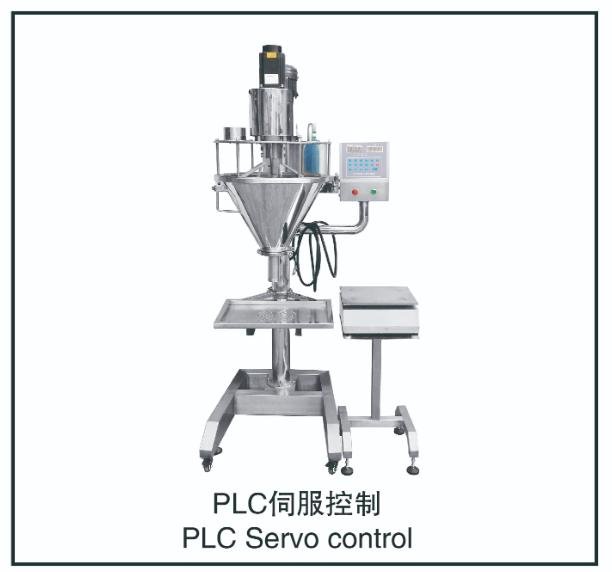
The UF-F2 is equipped with a Delta PLC control system and a servo motor, providing a more advanced configuration than a basic stepper-motor-based filler.
Its key features include:
- A multilingual operating interface, including German.
- Two filling methods: fill-by-volume and fill-by-weight.
- Servo motor control for driving the auger.
- A user-friendly touchscreen for setting and adjusting filling parameters.
For the weight-based filling method, the reference configuration offers a stated filling accuracy of ≥99.7%, while the volume-based method offers ≥99%. Actual results depend on the material and application conditions.
The availability of two filling methods gives the customer more flexibility when selecting the appropriate dosing approach.
Screw Conveyor Feeder for Continuous Material Supply
To reduce the need for manual powder loading, the proposed system includes a screw conveyor feeder.
The feeder transfers powder into the machine’s hopper, supporting a more convenient material supply process. It is particularly useful when the filling operation involves relatively large package weights and repeated production batches.
The feeder’s configuration and operation should be matched to the powder’s flow characteristics and the required production rate.
- Dust Control for Cleaner Powder Filling
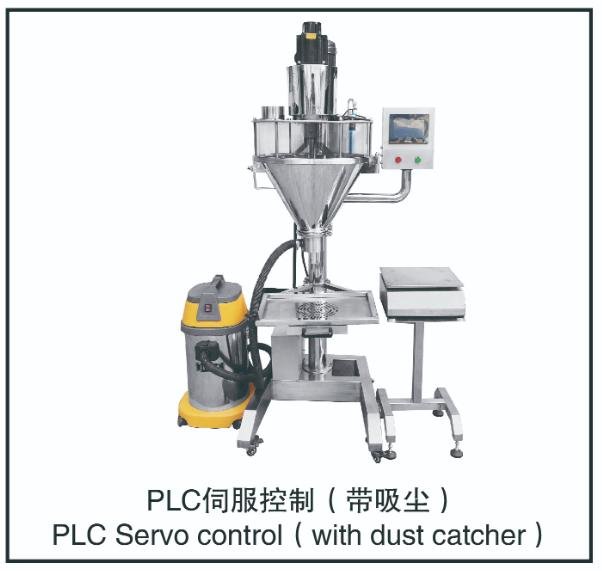
Powder dust can affect the working environment, product cleanliness, and the sealing quality of packages. Fine powders may escape around the filling nozzle during dosing, especially when the material is lightweight or easily dispersed.
To address this concern, UF updated the proposed configuration to include a dust-proof ring for connecting an external vacuum cleaner.
This arrangement helps collect escaping dust around the filling nozzle and supports a cleaner filling process.
For applications involving particularly fine, dusty, or lightweight powders, additional factors should also be evaluated, including the powder’s flowability, filling speed, nozzle design, and dust collection requirements.
Choosing the appropriate dust control solution starts with understanding the powder itself. UF recommends confirming the material characteristics before finalizing the machine configuration.
- F2vs. F2E: Choosing the Right Configuration
Not every application requires the same level of automation or control. UF offers different semi-automatic auger filling machine configurations to suit different budgets and operating requirements.
| Feature | UF–F2 | UF–F2E |
| Control system | Delta PLC touchscreen | Wecon touchscreen control |
| Motor | Servo motor | Stepper motor |
| Filling method | Volume-based and weight-based | Volume-based |
| Operating language | Multilingual, including German | Chinese and English |
| Feeder drive | Gearbox drive | Belt drive |
| Hopper configuration | Round hopper, UF-F114R | Square hopper, UF-F114S |
The F2 is a suitable option for customers who need more flexible filling methods, a multilingual interface, and a servo-driven configuration.
The F2E is an economical alternative for applications where volume-based filling and simpler controls are sufficient.
The right choice depends on the product, target filling weight, accuracy requirements, operating environment, and budget.
- Production Lead Time and Shipping to Germany
Delivery planning was another important part of this project.
At the time of the quotation in September 2024, UF advised that the standard F2 machine could be prepared for shipment in approximately seven days after payment. A shorter production preparation period of three to five days was also discussed for the air-shipping arrangement, subject to the applicable order and production conditions.
Two shipping options were evaluated:
- Sea freight:Approximately 45 days after the vessel’s departure for Hamburg.
- Air freight:A faster transportation alternative for customers who prioritize delivery speed.
These were estimates provided during the original project in 2024, not current shipping commitments. Actual production schedules, freight transit times, and costs should be reconfirmed for new orders.
Discussing production and transportation together helps customers plan procurement, installation, and the start of their packaging operations more effectively.
- Technical Support After Delivery
UF’s service does not end when a machine leaves the factory.
After the customer assembled the machine, a question arose regarding an unused electrical socket on the left side of the equipment. UF clarified that the socket was intended for the optional UF-F2C clamping and holding device, which was not included in the customer’s F2 configuration.
The customer was advised that the socket could be left unused.
This type of technical clarification helps customers understand their equipment configuration and avoid unnecessary concerns during installation and commissioning.
UF also provides operating instructions, installation guidance, and online technical support to help customers operate their machines.
- Why Choose UFfor Powder Filling Equipment?
Choosing a powder filling machine involves more than comparing machine prices. The equipment must suit the product, filling range, accuracy target, feeding method, and production environment.
UF provides different auger filling solutions to address these considerations, including:
- Semi-automatic powder filling machines for different filling weights.
- Interchangeable auger screws for multiple dosing ranges.
- PLC touchscreen controls and servo motor configurations.
- Volume-based and weight-based filling options on selected models.
- Screw conveyor feeders for powder transfer.
- Dust control accessories for suitable applications.
- Technical assistance before and after delivery.
By evaluating the application requirements first, customers can select a configuration that balances functionality, operating convenience, and investment cost.
Conclusion
The German customer’s project illustrates how a semi-automatic auger powder filling machine can be configured around multiple filling ranges, material feeding requirements, and dust control needs.
With three interchangeable auger screws, a Delta PLC touchscreen, a servo motor, and a screw conveyor feeder, the UF-F2 provides a flexible solution for businesses handling different powder package weights.
If you are looking for a powder filling machine for 500 g, 1 kg, 3 kg, or 5 kg packages, UF can help you evaluate the appropriate auger configuration, feeding system, and dust control options for your application.
Contact UF to discuss your powder filling requirements and request a customized machine recommendation.
Frequently Asked Questions
Q1: Can one semi-automatic powder filling machine handle different filling weights?
Yes. A suitable auger filling machine can accommodate multiple filling weights by changing the auger screw and adjusting the operating parameters. The achievable filling range depends on the machine configuration and powder characteristics.
Q2: What is the difference between fill-by-volume and fill-by-weight?
Fill-by-volume doses powder according to a preset auger operation or volume-related setting. Fill-by-weight uses a weighing system to control the target net weight. The appropriate method depends on the required accuracy and application.
Q3: How can powder dust be reduced during filling?
A suitable dust collection arrangement, such as a dust-proof ring connected to an external vacuum cleaner, can help collect dust around the filling nozzle. The final solution should be selected according to the powder’s characteristics and the filling process.
Q4: Does UF offer a powder feeding system?
Yes. A screw conveyor feeder can be integrated with a compatible auger filling machine to transfer powder into the filling hopper and reduce manual loading.
Q5: How long does it take to deliver a powder filling machine to Germany?
Delivery time depends on production readiness, shipping method, customs procedures, and destination arrangements. Contact UF for an updated quotation and delivery estimate.