How to Prevent Metal Contamination in Powder Packaging
Metal contamination is one of the most serious quality risks in powder packaging. A single piece of metal in a finished pack can lead to product rejection, customer complaints, regulatory scrutiny, and even full-scale product recall.
Many factories assume metal contamination only comes from raw materials. In reality, it can enter the product stream from many points throughout the packaging line: equipment wear, maintenance debris, loose fasteners, broken screen mesh, abraded screws and even recycled packaging materials. The most effective approach is not just to detect metal after it happens, but to prevent it from reaching finished products in the first place.
This guide explains the most common sources of metal contamination in powder packaging lines, and shares practical prevention and detection strategies to protect your product, your brand and your customers.
Why Metal Contamination Is Such a High Risk
Metal contamination is not just a cosmetic quality issue. It directly affects safety and brand reputation:
- Consumer safety risk: Hard metal fragments in food, pharmaceutical or nutraceutical products can cause serious injury.
- Product rejection: Even a single detected metal piece can lead to entire batches being held or scrapped.
- Customer complaints: Metal in finished products often results in returned orders and lost customer trust.
- Regulatory non-compliance: Many industries require documented foreign material control, including metal hazard prevention.
- Recall cost: Recalls involve labor, logistics, replacement, brand damage and potential legal liability.
For these reasons, metal contamination prevention should be treated as a non-negotiable part of powder packaging line design and operation.
5 Common Sources of Metal Contamination in Powder Packaging
Metal can enter the product stream at almost any stage. These are the most frequent sources:
1. Raw Material Ingress
This is the most expected source, but not the only one.
- Metal fragments from agricultural harvesting equipment.
- Wire, staples or metal debris in raw material bags.
- Ferrous metal from transportation, storage or handling equipment.
- Metal particles already present in incoming powder batches.
2. Equipment Wear
This is one of the most underdiagnosed sources.
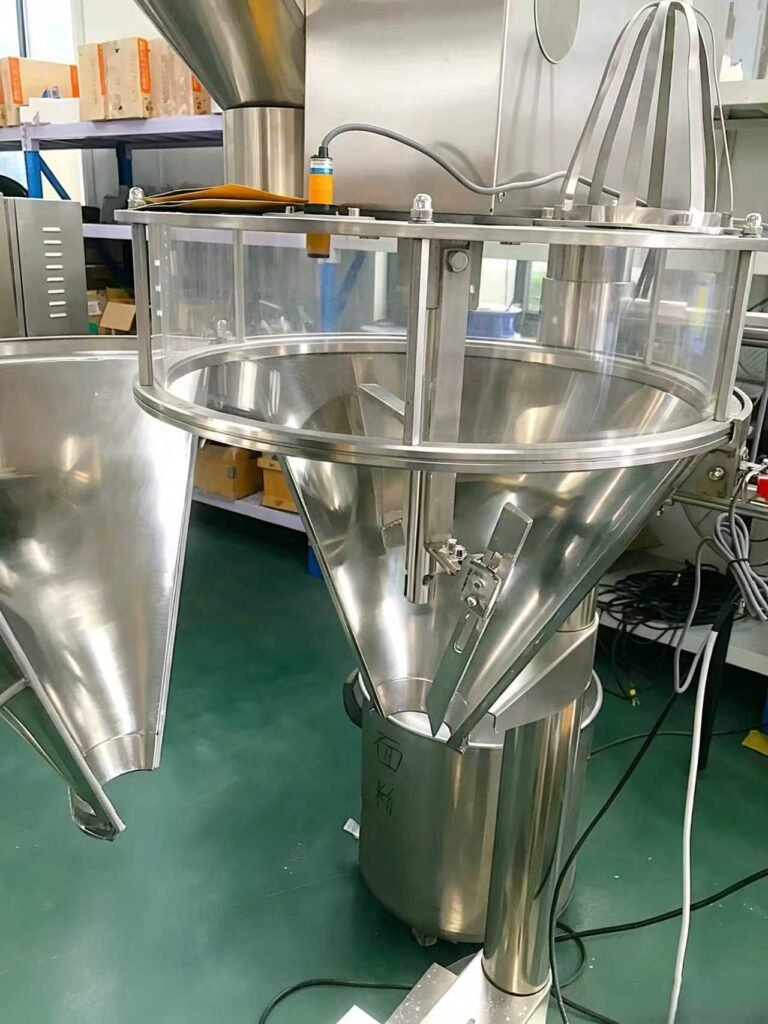
- Auger screw flights wearing down and shedding small metal particles.
- Metal-on-metal contact inside valves, feeders and housings.
- Abrasion from abrasive powders gradually eroding contact surfaces.
- Fatigue failure of small components inside the filler.
3. Maintenance and Repair Debris
Maintenance can introduce contamination if not properly controlled.
- Metal shavings from drilling, grinding or cutting near open product zones.
- Loose screws, washers, nuts and tool parts left inside equipment.
- Broken drill bits, cutting discs or wire fragments.
- Uncontrolled debris after component replacement.
4. Fastener and Component Failure
Small parts can fall into product flow without being noticed.
- Loose bolts, screws and pins inside hoppers and chutes.
- Broken springs, clips and lock washers.
- Damaged screen mesh that breaks free and enters the product stream.
- Worn retaining rings and fasteners in high-vibration areas.
5. Packaging Material and Rework Material
Metal can also come from downstream packaging handling.
- Metal staples or clips from incoming bags and rework batches.
- Foil fragments from laminated packaging.
- Broken sealing jaws or cutter debris.
- Recycled or reworked material that was not properly screened.
Three Levels of Metal Contamination Control
The best strategy is a layered approach: prevent metal from entering, detect it as early as possible, and stop it from reaching finished products.
Level 1: Prevention — Stop Metal Before It Enters the Product Stream
Prevention is the most reliable and least costly control.
- Inspect all incoming raw materials and packaging components for visible metal debris.
- Use magnetic separation at the intake of silos, hoppers and conveying lines.
- Install strainers, screens and filters where appropriate.
- Keep maintenance tools, fasteners and metal debris away from open product contact zones.
- Use documented lockout and tool control procedures during maintenance.
If metal never enters the product stream, you do not need to rely on detection alone.
Level 2: Detection — Identify Metal Early in the Process
Detection systems catch metal that prevention did not stop.
- Install metal detectors before packaging to intercept contaminated material.
- Use in-line metal detection between the feeder and the filling machine.
- Place checkpoints at critical transfer points where metal is most likely to appear.
- Test detectors regularly with calibrated test samples for ferrous, non-ferrous and stainless steel.
Early detection reduces waste because contaminated material can be removed before filling and packaging.
Level 3: Rejection — Prevent Contaminated Products From Reaching Customers
Even with prevention and detection, you still need a final rejection mechanism.
- Use automatic reject systems downstream of metal detectors.
- Ensure rejected packs are clearly segregated, labeled and investigated.
- Do not allow rejected material to re-enter the production line without root cause verification.
- Keep detailed records of metal detection events, rejection times and material types.
A good rejection system does not just remove bad packs — it helps you identify where the problem came from.
Recommended Configuration by Risk Level
| Risk Level | Typical Application | Recommended Control |
|---|---|---|
| Low risk | Bulk industrial powders | Magnetic separation + periodic inspection |
| Medium risk | Food ingredients, spices, chemicals | Magnetic separation + in-line metal detector |
| High risk | Baby formula, pharmaceuticals, nutraceuticals | Multi-stage magnet + metal detector + automatic rejection + full documentation |
Common Mistakes to Avoid
- Only relying on end-of-line detection. Detection is important, but prevention is more reliable.
- Ignoring equipment wear as a source. Worn screws, valves and housings can continuously introduce metal particles.
- Not testing metal detectors regularly. An untested detector provides false confidence.
- Allowing maintenance debris near product zones. Many contamination events happen during repairs.
- Treating rejected packs as waste without investigation. Every metal detection event is an opportunity to eliminate the root cause.
Final Thoughts
Metal contamination prevention is not a single device or one-time project. It is a system of prevention, detection, rejection and continuous improvement.
Start by controlling raw material intake and maintenance debris, then add magnetic separation and metal detection at critical points. For high-risk products, combine multiple layers of protection and keep full documentation for traceability and compliance.
If you are evaluating metal contamination control for your powder packaging line, or need to audit existing detection and prevention systems, our engineering team can review your process and recommend a risk-based control plan. Contact us today for a contamination control assessment.