For chemical, food, and pharmaceutical manufacturers handling bulk powders, filling accuracy is never a minor issue.
A deviation of ±0.5% may seem small on a single bag, but scaled to 25kg big bags and thousands of cycles per day, it adds up to tons of material loss every year. Beyond waste, poor accuracy also leads to failed quality checks, customer returns, and compliance risks.
When facing accuracy problems, many factories first react by replacing the weighing sensor — and often see little improvement. That is because powder filling deviation is never caused by a single part. It is the combined result of feeding performance, filling method, weighing system, material properties, and equipment maintenance.
This article breaks down the root causes of inaccuracy in industrial powder filling, and shares 5 actionable optimization dimensions to help you systematically improve weighing consistency.
Root Causes of Poor Powder Filling Accuracy
Before jumping into solutions, it is critical to identify where the deviations actually come from.
1. Intrinsic interference from material properties
Light, fluffy, air-entrained powders such as carbon powder, carbon black, and fine food powders have inherently unstable density. Combined with their tendency to bridge and dust, their flow rate varies far more than granular materials during filling.
2. Residual material overshoot at the feeding end
After a standard screw feeder stops running, residual powder trapped in the screw flights continues to fall by gravity. This uncontrolled drop is the single most common cause of over-weight errors.
3. Impact error from falling material
In high-level filling, powder drops from a significant height to the bottom of the bag. The continuous impact on the weighing platform creates signal fluctuations, causing the system to misjudge the actual weight and stop feeding too early or too late.
4. Control system response lag
There is always a millisecond-level delay between the “stop feeding” signal and the actual motor stop and valve closure. For high-output machines, even this short delay translates into measurable weight deviation.
5 Core Dimensions to Systematically Improve Powder Filling Accuracy
1. Feeding System: From Uncontrolled Drop to Precision Flow Control
Feeding is the source of accuracy, and stable material flow is the foundation of high precision.
Choose vertical screw forced feeding first
Compared with horizontal screws, the vertical design uses both gravity and screw propulsion to move material. It delivers smoother flow, is less prone to bridging, and significantly improves flow stability. The fully enclosed internal structure also makes cleaning and product changeover easier, preventing residual caked material from disrupting flow rate.
Use dual-speed or three-speed feeding modes
Fast feeding completes 85–90% of the target weight to maintain packaging efficiency. Slow feeding takes over for the remaining 10–15% for fine weight control. The switch threshold and screw speed can be adjusted for materials with different flow properties.
Add a pneumatic shut-off valve at the outlet
A conical pneumatic valve installed at the screw discharge closes synchronously the moment feeding stops, completely cutting off material flow and eliminating over-weight errors caused by residual screw drop.
Equip the hopper with an automatic arch-breaking device
Powder often forms a bridge at the hopper outlet as material level drops, causing uneven or interrupted flow. An arch breaker activates simultaneously with feeding to break up the bridge and maintain consistent feed pressure.
2. Filling Method: From High-Level Drop to Submerged Filling
Many manufacturers overlook how filling method affects weighing accuracy. In fact, material fall impact is a major source of weighing deviation.
In traditional high-level filling, the filling outlet sits dozens of centimeters above the bag bottom. The continuous impact of falling powder creates a “false high” reading on the load cell, causing the system to stop feeding early and resulting in under-weight bags. The impact also varies from cycle to cycle, leading to inconsistent results.
Servo-driven submerged filling solves this problem at the source:
– Before filling, the bag clamp lifts the bag so the filling nozzle sits deep inside, close to the bottom.
– As material builds up, the servo system lowers the bag at a constant speed, keeping the outlet a short distance from the material surface throughout the cycle.
This design not only drastically reduces dust blowback, but more importantly eliminates the impact force of free-falling material. The weighing signal becomes far more stable, and weight judgment becomes far more accurate, raising consistency by a full grade.
3. Weighing System: From Single Weighing to Dynamic Compensation
A high-quality load cell is the basis of accuracy, but it is far from enough. Installation method and control algorithm matter just as much.
Use high-precision independently suspended load cells**
Choose industrial-grade precision weighing sensors such as Mettler Toledo, and mount them in an independent suspension configuration. This isolates vibration from the machine frame and motor from interfering with the weighing signal, ensuring stable, reliable data.
Add dynamic error compensation algorithm**
Advanced control systems automatically track changes in feeding speed caused by material density and hopper level, and dynamically adjust the stop-feeding threshold. For example, when the hopper is full and feed rate is high, it switches to slow feeding earlier; when level is low and feed is slower, it delays the switch. This keeps final weight consistent across all material levels.
4. Material Pre-Treatment: From Direct Filling to Degassed & Stabilized Density
For light, fluffy, high-air-content powders, this step is often the key to breaking through accuracy plateaus.
Large amounts of trapped air make the volume of equal-weight powder highly variable, and cause density fluctuations during feeding. Degassing with a suction pump before or during filling removes excess air, compacts the material, and stabilizes its density — which naturally improves filling weight consistency.
Degassing also produces flatter, less bulky finished bags that are much easier to palletize and transport.
5. Structure & Maintenance: From One-Time Setup to Long-Term Stability
Accuracy cannot be judged only by initial commissioning results. Long-term operational stability matters more.
Externally mounted bearing design**
Screw bearings mounted outside the product zone prevent powder ingress that would cause wear and seizure, which would degrade screw speed consistency and filling accuracy over time. External bearings also last longer and are easier to maintain.
Open-view hopper design**
Allows operators to monitor material status inside the hopper in real time, so they can refill material and clear caking before low level or bridging causes accuracy fluctuations.
Establish regular calibration and cleaning routines**
Calibrate the weighing system periodically, and clean residual material from the screw and hopper. This prevents caked material from building up on internal walls, narrowing the flow path and altering feed speed.
Final Takeaway
High precision powder filling is never achieved by a single “magic” component. It comes from the systematic coordination of feeding, filling, weighing, and mechanical structure.
Improving from ±0.5% to ±0.1% may look like only 0.4 percentage points on paper, but behind it is full optimization from feeding method to control algorithm.
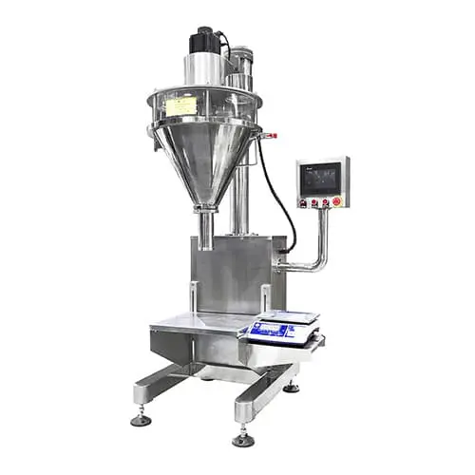
Our UF-P5 PRO vertical screw powder weighing and packing machine is engineered on exactly this logic: vertical screw dual-speed feeding with pneumatic shut-off valve, servo submerged filling, Mettler Toledo load cell with dynamic compensation, plus available degassing and dust collection modules. For 1–50kg big bag powder filling, it delivers stable ±0.1% weighing accuracy.
If your production line is suffering from poor filling accuracy, heavy dust, or low efficiency, welcome to contact our team. We can provide a targeted filling solution based on your material properties and production requirements.