How to Reduce Material Waste in Powder Packaging Lines: 4 Practical Ways
For powder manufacturers, raw material cost is often the largest single expense. Yet material waste in packaging lines remains a largely hidden cost. Many factories focus only on machine speed and labor efficiency, and overlook how small amounts of waste across every shift add up to significant profit loss over a year.
Waste does not only come from obvious spillage. It comes from filling inaccuracy, dust escape, product changeover residue, and rejected batches. This guide breaks down the four largest sources of powder packaging waste, and shares practical, proven methods to reduce loss and improve overall material yield.
1. Cut Waste From Filling Inaccuracy
Over-filling is the single largest source of measurable material waste for most powder lines. Even a small positive weight deviation adds up quickly across thousands of packs.
Why it happens
- Out-of-calibration weighing systems
- Poor screw design for the specific powder
- Lack of closed-loop weight feedback
- Speed prioritized over accuracy
- Bulk density variations between batches
Solutions
- Upgrade to servo-driven gravimetric filling with load cell feedback. This automatically compensates for density changes and keeps weights within a tight tolerance.
- Perform regular weight calibration and verification checks. Build a simple daily check routine into shift handover.
- Match screw profile to your powder flow properties. The wrong screw will cause both over-fill and under-fill variation.
- Install an in-line check weigher with automatic feedback adjustment to trim filling parameters continuously.
Typical impact
For a medium-volume line running 50 packs per minute, reducing average over-fill from 0.5% to 0.1% saves roughly 2% of total raw material usage — often enough to pay for equipment upgrades in under a year.
2. Recover Loss From Dust Escape & Emission
Fine powder dust that escapes during filling is both material loss and a workplace hygiene issue. For high-value products, dust loss alone can represent a surprising percentage of total yield.
Why it happens
- Insufficient dust extraction at the filling point
- Worn or poorly sealing bag clamps
- Open transfer points between process stages
- No dust recovery and reuse system
Solutions
- Install point-of-fill dust extraction directly at the filling nozzle, not just general room ventilation.
- Replace worn bag clamp seals regularly. Poor sealing is the top cause of increased dust leakage.
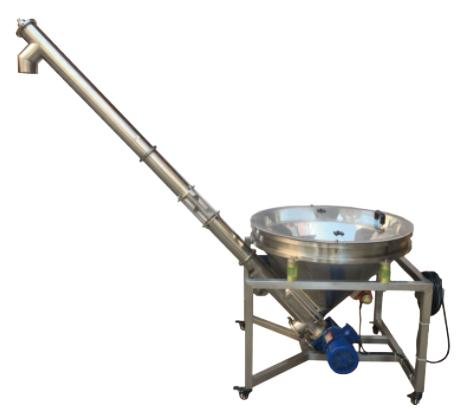
- Use enclosed conveying systems (screw or vacuum) instead of open transfer between hoppers and machines.
- Add a dust recovery filtration system that allows captured fine powder to be safely reused within production.
Important note
For food and pharmaceutical products, ensure recovered dust meets hygiene and quality standards before reintroducing it into the production stream.
3. Minimize Changeover & Cleaning Residue
For multi-SKU production lines, product left in the machine after changeover is often thrown away. Frequent changeovers multiply this waste significantly.
Why it happens
- Poor machine design with hard-to-clean crevices
- No quick-disassembly for product contact parts
- Long product paths that hold large volumes of residual powder
- Incomplete cleaning procedures
Solutions
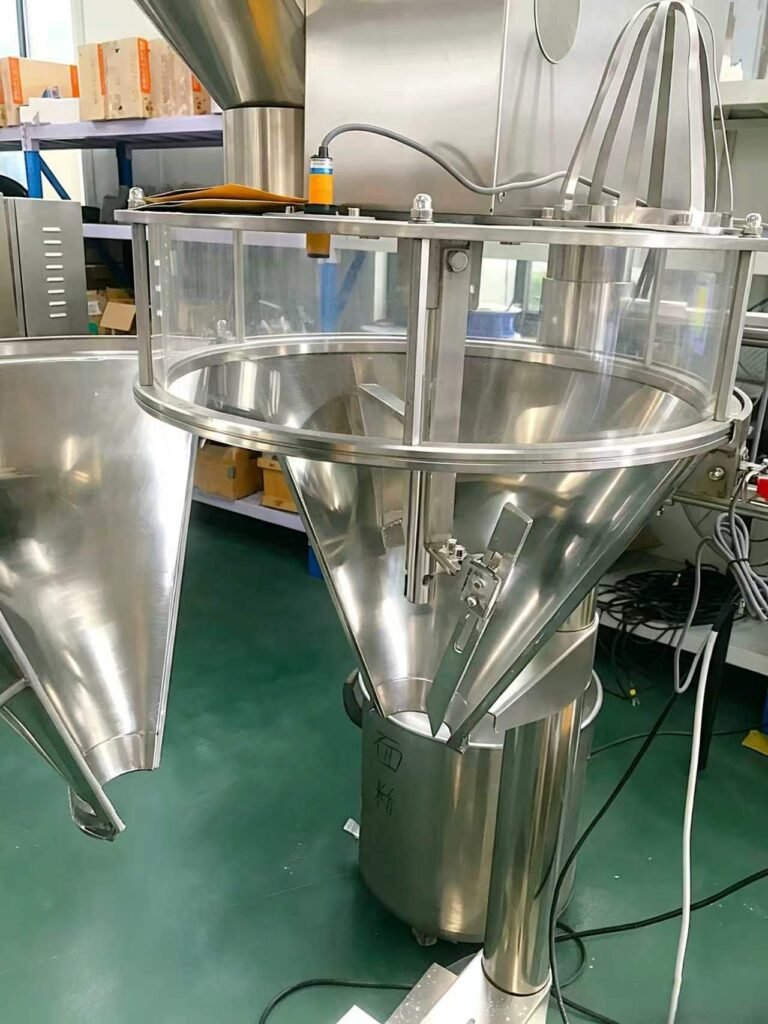
- Choose machines with tool-free disassembly of screw, hopper and product contact parts. This allows complete removal and full cleaning.
- Optimize changeover procedures with a clear cleaning checklist. Train operators on complete material removal.
- Use product pigging or purge procedures for long transfer lines to recover residual material.
- Plan production schedules to group similar products together, reducing cross-contamination risk and the amount of material discarded during changeover.
Typical impact
For factories running 3+ product changeovers per day, reducing residual waste per changeover by just 1–2kg can add up to over a ton of saved material per year.
4. Reduce Waste From Downtime & Rejected Product
Unplanned downtime and rejected batches create waste that is often never counted at all. Partial runs, startup material and off-spec product all contribute to loss.
Why it happens
- Frequent machine breakdowns
- Long startup and adjustment time after stops
- No early detection of quality drift
- Poor line balancing causing backup and spillage
Solutions
- Implement a structured preventive maintenance program to reduce unplanned downtime. Most breakdowns that cause waste are predictable and preventable.
- Reduce startup waste by using recipe storage on machine controls. This recalls proven settings for each product instead of re-adjusting every run.
- Install in-line quality inspection (weight, seal, metal detection) that catches issues early before large volumes of bad product are produced.
- Balance line station capacities so that no single station causes backup, spillage or product damage.
Building Waste Reduction Into Your Line From The Start
If you are planning a new line or upgrading equipment, you can build waste reduction into the initial design:
- Specify gravimetric filling instead of volumetric filling for all but the lowest-value products
- Include integrated dust extraction and recovery from the beginning
- Choose hygienic, easy-clean machine design
- Add in-line check weighing and feedback control
- Plan line layout for minimal transfer points and short product paths
Final Thoughts
Material waste in powder packaging lines is often accepted as an unavoidable cost of doing business. In reality, most waste is avoidable with the right equipment, procedures and attention to detail.
You do not need to replace every machine at once. Start with the largest source of waste, apply targeted improvements, and measure the results. Even small reductions in waste percentage deliver large financial benefits over time.
If you would like to identify the largest waste sources on your powder packaging line, or need equipment recommendations to improve material yield, our engineering team can perform a free line waste audit and propose targeted solutions. Contact us today to discuss your production.