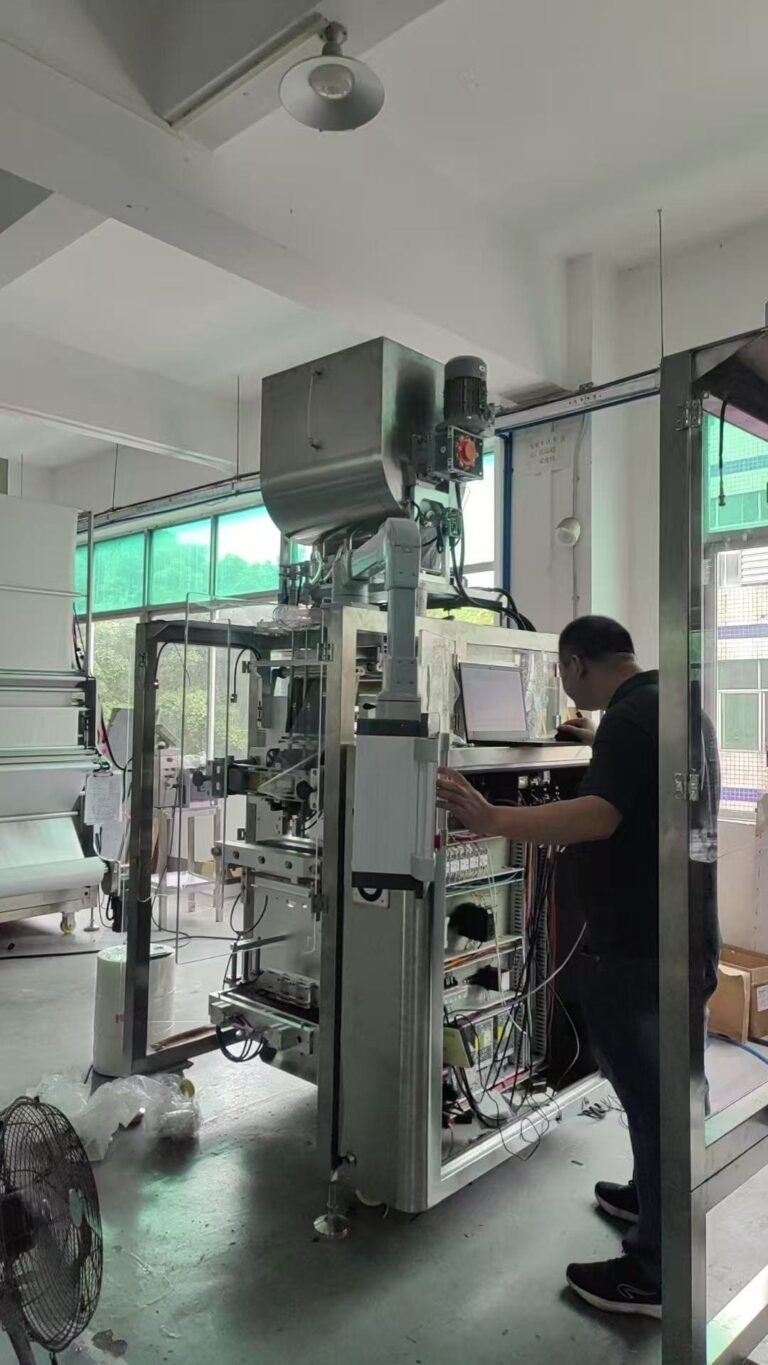
The Growing Demand for Automated Packaging Equipment
As manufacturing industries continue to scale globally, companies are increasingly looking for ways to improve efficiency, reduce labor costs, and maintain consistent product quality. Automated packaging machinery has become an essential part of modern production lines across industries such as food, pharmaceuticals, cosmetics, and chemicals.
From powder filling machines to liquid filling systems, as well as capping and labeling machines, reliable packaging equipment ensures that products are accurately filled, securely sealed, and professionally labeled before reaching the market.
For manufacturers aiming to increase productivity while maintaining strict quality standards, investing in a well-designed packaging line is no longer optional—it is a necessity.
Complete Packaging Solutions for Different Industries
Different industries require different packaging approaches. For example:
-
Powder products such as milk powder, spices, or pharmaceutical powders require high-precision powder filling machines.
-
Liquid products like beverages, oils, detergents, and cosmetics require stable and hygienic liquid filling systems.
-
Bottled products need reliable capping machines to ensure proper sealing.
-
Retail products depend on professional labeling machines for brand presentation and traceability.
A modern packaging line typically integrates several machines working together, including:
-
Filling machines
-
Bottle capping machines
-
Labeling machines
-
Bottle unscramblers
-
Conveying systems
By integrating these machines into a single production line, manufacturers can achieve fully automated packaging processes with minimal manual intervention.
Key Advantages of Modern Packaging Machinery
1. High Precision and Consistency
Advanced filling systems use servo motors, PLC control systems, and precision sensors to maintain accurate filling volumes. This is especially important for industries where product consistency and regulatory compliance are critical.
2. Increased Production Efficiency
Automated packaging equipment significantly increases production speed compared to manual or semi-automatic processes. Manufacturers can process thousands of bottles or containers per hour while maintaining stable operation.
3. Flexible for Different Products
Modern packaging machines are designed with adjustable components, allowing manufacturers to handle different bottle sizes, cap types, and product viscosities. This flexibility helps companies adapt quickly to changing market demands.
4. Reduced Labor Costs
Automation reduces reliance on manual labor, lowers operational costs, and minimizes human error in the production process.
5. Reliable and Stable Operation
High-quality packaging equipment is designed for long-term industrial operation. Stable mechanical structures, durable components, and intelligent control systems ensure continuous production with minimal downtime.
Powder Filling Machines for Accurate Dosing
Powder filling is one of the most technically demanding packaging processes. Products such as protein powder, spices, flour, and pharmaceutical powders require precise dosing to maintain product consistency.
Modern powder filling machines often use auger filling technology, combined with servo motor control, allowing accurate filling for different powder densities and flow characteristics.
This technology ensures:
-
High filling accuracy
-
Stable operation
-
Easy cleaning and maintenance
-
Compatibility with various container sizes
Liquid Filling Systems for Multiple Applications
Liquid filling machines are widely used in industries such as food processing, cosmetics manufacturing, chemical production, and pharmaceuticals.
Depending on the product characteristics, manufacturers can choose from several filling technologies, including:
-
Piston filling machines
-
Gravity filling machines
-
Pump filling systems
-
Overflow filling machines
These systems are designed to handle liquids with different viscosities, from water-like beverages to thicker products such as sauces, oils, and detergents.
The Importance of Reliable Capping and Labeling
After filling, products must be securely sealed and properly labeled.
A capping machine ensures that caps are tightened with consistent torque, preventing leakage during transportation and storage. Automated capping equipment can handle various cap types, including screw caps, pump caps, flip-top caps, and metal caps.
Meanwhile, labeling machines play a key role in product presentation and compliance. High-precision labeling systems ensure that labels are applied accurately, improving brand appearance and providing important product information.
Integrated Packaging Lines for Modern Factories
Rather than purchasing individual machines separately, many manufacturers now prefer integrated packaging lines.
A typical automated packaging line may include:
-
Bottle unscrambler
-
Filling machine
-
Capping machine
-
Labeling machine
-
Collection table or packaging station
This integrated approach improves production efficiency, reduces manual handling, and ensures a smooth production flow.
Choosing the Right Packaging Machinery Supplier
When selecting packaging equipment, manufacturers should consider several important factors:
-
Equipment reliability and build quality
-
Technical support and after-sales service
-
Customization capabilities
-
Compatibility with existing production lines
Working with an experienced packaging machinery manufacturer can help companies design the most suitable packaging solution for their specific production requirements.
Supporting Global Manufacturers with Reliable Packaging Equipment
With years of experience in packaging machinery manufacturing, companies like Uniflow focus on delivering reliable filling, capping, and labeling solutions for global customers.
From standalone machines to fully integrated packaging lines, modern packaging equipment helps manufacturers improve productivity, maintain consistent product quality, and remain competitive in fast-growing markets.
As automation continues to transform manufacturing industries, advanced packaging machinery will remain a key driver of efficient and scalable production.