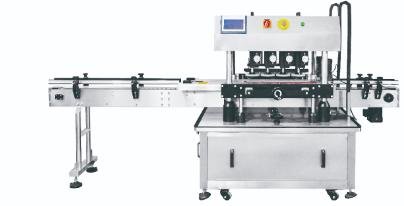
Selecting a powder bottling line is far more than picking a filling machine and connecting auxiliary equipment. A poor match leads to chronic under-accuracy, frequent downtime, wasted material, and higher long-term costs — even if the machine itself looks good on paper.
Many manufacturers focus only on speed and price during initial selection, and end up with a line that does not fit their material properties, production volume, or compliance requirements. To avoid costly mistakes, you need to evaluate the full picture across 11 core dimensions.
1. Powder Material Properties
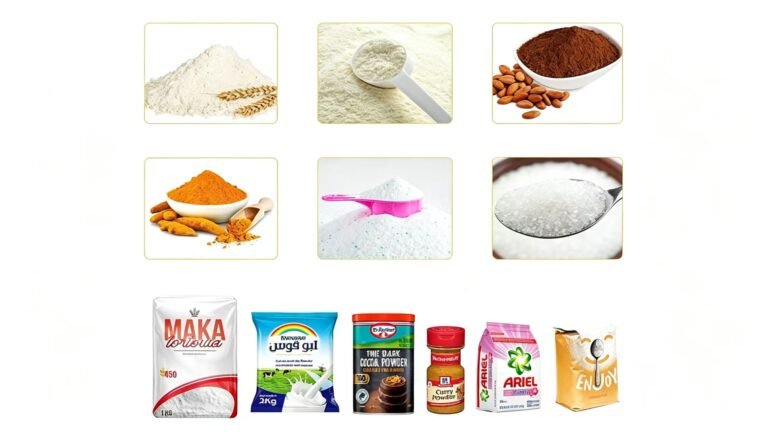
The physical characteristics of your powder are the first and most important factor, as they determine which filling principle will work reliably.
Consider:
- Bulk density and flowability: Free-flowing granules work with volumetric cup fillers, while fine, cohesive or fluffy powders require auger screw filling for consistent dosing.
- Dust generation: Fine, dusty powders need enclosed filling and dust extraction to prevent waste and safety hazards.
- Hygroscopic nature: Moisture-sensitive materials require heated hoppers or dry gas protection to prevent caking and bridging.
- Abrasiveness: Hard, abrasive powders wear out screw parts faster, and require hardened steel components for longer service life.
2. Required Production Output
Output volume defines the required number of filling heads and level of automation.
- Calculate your actual output in bottles per minute, not just daily or annual volume, and account for changeover and downtime.
- For low-volume, multi-SKU production, a single-head semi-automatic line is usually more cost-effective.
- For high-volume mass production, multi-head fully automatic lines deliver the lowest per-unit cost.
- Avoid over-sizing: a line running far below its rated capacity wastes capital and often performs less accurately at low speed.
3. Filling Accuracy Requirements
Accuracy expectations vary widely by industry and product value.
- Standard food products: typically ±0.5% is acceptable.
- Pharmaceutical and high-value nutraceutical powders: often require ±0.1% or better, with weight check and rejection systems.
- Higher accuracy requires servo-driven filling, precision load cells, and advanced control algorithms — and comes at a higher price point.
- Always specify accuracy at your actual target weight, not just a general machine rating.
4. Bottle & Package Specifications
Your container design directly affects machine compatibility and changeover speed.
Key parameters:
- Bottle material: plastic, glass, metal
- Neck diameter and opening size
- Fill volume range
- Container shape and stability
If you run many different SKUs, prioritize machines with tool-free change parts and fast adjustment, to minimize downtime between formats.
5. Level of Automation
Automation balances labor cost, production efficiency and operational flexibility.
- Manual / basic semi-auto: low cost, high flexibility, suitable for small batches and pilot lines.
- Integrated semi-auto: automates core filling and capping, most cost-effective for medium production.
- Fully automatic: end-to-end operation with data tracking, ideal for high-volume regulated production.
There is no universal best level. Choose based on your labor costs, shift count and product variety.
6. Regulatory & Compliance Requirements
Different industries impose strict requirements on equipment design and materials.
- Food contact surfaces require food-grade 304 or 316 stainless steel, with smooth crevice-free finishes.
- Pharmaceutical production needs GMP-compliant design, full disassembly for cleaning, and batch traceability.
- Explosive or flammable powders require ATEX / explosion-proof electrical components.
- Verify certifications early, as retrofitting compliance is far more expensive than building it in.
7. Dust Control & Product Containment
For fine, toxic or high-value powders, containment is both an economic and safety issue.
- Enclosed filling systems minimize dust escape and material loss.
- Integrated dust extraction at the filling point captures airborne powder at the source.
- For high-value products, recovered dust can often be reused, reducing raw material waste significantly.
- Good containment also protects operators and reduces facility cleaning costs.
8. Available Factory Space & Layout
Physical constraints on the production floor will shape your line configuration.
- Measure available length, width and ceiling height before specifying equipment.
- Define bottle infeed direction and finished product outfeed direction.
- Plan space for operator access, maintenance, and raw material loading.
- If integrating with existing upstream or downstream equipment, confirm interface dimensions and control compatibility early.
9. Maintenance & Spare Parts Support
A low purchase price means little if the line is down for weeks waiting for a spare part.
- Check that common wear parts such as seals, screws and bearings are standard and readily available.
- Prefer suppliers that offer local spare parts stock and technical support.
- Evaluate ease of disassembly for cleaning and maintenance.
- Consider mean time between failures (MTBF) and mean time to repair (MTTR), not just initial cost.
10. Total Cost of Ownership
The real cost of a bottling line is far more than its purchase price.
Calculate total cost over the equipment lifecycle:
- Initial equipment and installation cost
- Energy and compressed air consumption
- Labor requirement per shift
- Regular maintenance and spare parts
- Expected downtime and production loss
A slightly more expensive, better-built line will almost always cost less over 5–10 years of operation.
11. Future Scalability
Your production needs will probably change over time. Build in room to grow.
- Can you add extra filling heads later if volume increases?
- Can you upgrade from semi-automatic to fully automatic operation?
- Can the machine handle new bottle sizes or powder types you plan to introduce?
- Modular design lets you expand capability later without replacing the entire line.
Final Thoughts
The best powder bottling line is not the fastest, the cheapest, or the most automated. It is the one that best matches your material, your production volume, your compliance needs, and your future plans.
Working through these 11 factors before you order will help you avoid expensive mismatches and get a line that delivers reliable performance from day one.
If you would like a second opinion on your line specification, or need help sizing a powder bottling solution for your specific product, our engineering team can provide a free, no-obligation line assessment. Contact us today to discuss your project.