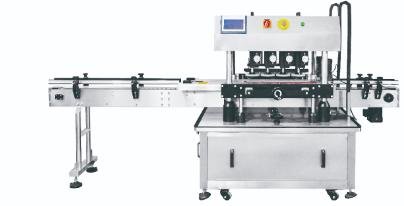
For glass jar packaging in food, pharmaceutical and cosmetic industries, seal quality directly determines product shelf life, leakage risk and customer satisfaction. A steam vacuum capping machine is the core equipment that creates a reliable hermetic seal and controlled internal vacuum for closed glass containers.
Many manufacturers choose a capper based only on price, and end up with inconsistent vacuum levels, frequent lid leaking, high bottle breakage, or poor compatibility with their jar and cap sizes. This guide breaks down the key selection criteria and compares three common machine configurations to help you match the right model to your production line.
Core Selection Criteria for Steam Vacuum Cappers
Before comparing models, clarify your requirements across these 5 dimensions to avoid costly mismatches:
- Jar & cap specifications Jar diameter, height, cap size and thread type determine the compatibility of the capping head. If you run multiple SKUs, prioritize models with quick-change cap chucks.
- Required vacuum level Different products need different residual oxygen levels. Preserved food usually requires higher vacuum than general cosmetic products. Make sure the machine can stably reach your target vacuum range.
- Production speed Output per minute defines whether you need a single-head, linear or rotary machine. Over-sizing wastes investment; under-sizing creates production bottlenecks.
- Product properties Hot fill products like sauces, jams and jellies have different capping requirements than ambient fill powders or solids. Steam condensation and seal temperature need to match the product.
- Automation level Match the level of automation to your upstream and downstream lines. Manual feed works for small batches; fully automatic integration is needed for high-speed continuous lines.
3 Common Steam Vacuum Capping Machine Models Compared
1. Entry-Level Single-Head Steam Vacuum Capper
This is the basic configuration for small batch and multi-SKU production.
Key features:
- Single capping head with manual cap placement
- Steam injection vacuum system
- Manual or semi-automatic bottle feeding
- Simple torque adjustment for different cap sizes
Ideal for:
- Small workshops, pilot lines and contract packaging
- Multi-SKU, low-volume production with frequent changeovers
- Jars and caps of various sizes and specifications
Advantages:
- Low upfront cost and small footprint
- Fast and simple size changeover
- Easy operation and low maintenance
Limitations:
- Lower output speed, typically 20–40 jars per minute
- Vacuum consistency depends more on operator experience
- Not designed for continuous long-run production
2. Standard Automatic Linear Steam Vacuum Capper
This is the most widely used mid-range model, balancing performance, cost and flexibility.
Key features:
- Automatic cap feeder and placement system
- Multi-claw rotary capping head with torque control
- Closed-loop steam vacuum control
- In-line bottle feed and discharge for line integration
- Built-in bottle protection to reduce breakage
Ideal for:
- Medium-scale food, nutraceutical and cosmetic production
- Sauces, jams, jellies, pickles and other glass jar products
- Output between 40 and 120 jars per minute
Advantages:
- Stable and consistent vacuum level across all jars
- Low breakage rate with guided bottle handling
- Good balance of speed and flexibility
- Cost-effective for most medium production lines
Limitations:
- Not the most economical choice for very small volumes
- Changeover takes longer than single-head manual models
3. High-Speed Rotary Steam Vacuum Capper
This is the industrial-grade configuration for large-scale mass production.
Key features:
- Rotary multi-station design with continuous bottle movement
- Precision torque control per capping head
- High-efficiency steam vacuum system with tight tolerance
- Fully integrated with bottle infeed, capping and outfeed
- Advanced monitoring and fault detection
Ideal for:
- Large food and pharmaceutical manufacturers
- Single-SKU or low-SKU high-volume production
- Output above 120 jars per minute, 24/7 operation schedules
Advantages:
- Highest output and production efficiency
- Best seal consistency and vacuum uniformity
- Lowest per-unit cost at high volume
- Designed for long continuous production runs
Limitations:
- Highest upfront capital investment
- Longer changeover time between different jar sizes
- Requires dedicated technical staff for maintenance
Which Model Is Right for You?
There is no universal best model. The right choice depends on your specific operation:
- Small batch, multi-SKU production → Start with an entry-level single-head capper
- Medium volume food and cosmetic lines → Choose a standard automatic linear capper for the best balance
- High-volume mass production with few SKUs → Invest in a high-speed rotary capper for long-term ROI
Final Thoughts
A properly selected steam vacuum capping machine does more than just tighten lids. It ensures consistent hermetic sealing, extends product shelf life, reduces packaging waste and lowers product return rates.
Matching the machine to your jar specifications, production volume and product properties will deliver far better long-term performance than simply choosing the cheapest or fastest option.
If you are not sure which steam vacuum capping machine fits your glass jar packaging line, or need help evaluating vacuum level and seal performance for your specific product, our technical team can provide a free sizing assessment. Contact us today to discuss your project.