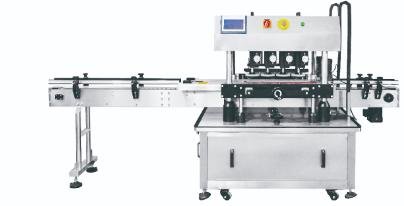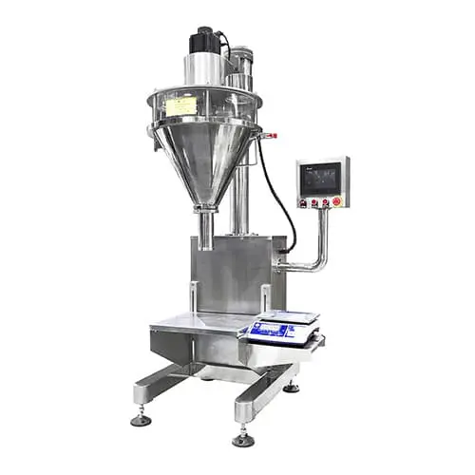
For powder packaging lines, choosing the right filling principle is the first decision that determines long-term accuracy, efficiency and operating cost. Two of the most common options are volumetric cup fillers and auger screw fillers. Many manufacturers choose based only on upfront price, and end up with poor accuracy, frequent downtime or high material waste because the machine does not match their powder properties.
Each filling technology has clear strengths and limitations. The right choice depends entirely on your material characteristics, required accuracy, production speed and product variety. This guide breaks down how each machine works, compares them across 6 core dimensions, and gives clear recommendations for different application scenarios.
How Each Filling Machine Works
Volumetric Cup Filler
A volumetric cup filler operates on a fixed-volume principle. It uses rotating measuring cups of calibrated volume to scoop powder from the hopper, then discharges the measured volume into containers below. Filling volume is adjusted by changing cup inserts or adjusting fill depth.
It is a purely mechanical filling method with no weighing feedback, and accuracy depends on consistent powder bulk density.
Auger Screw Filler
An auger filler uses a rotating screw inside a vertical tube to deliver powder. The screw rotates a precise number of revolutions to dispense a controlled amount of material. Advanced models use servo drive and load cell feedback for gravimetric filling, delivering high accuracy even for variable-density powders.
It is the most widely used technology for fine, cohesive or hard-to-handle powders.
6-Dimension Side-by-Side Comparison
1. Material Suitability
This is the most important factor — the wrong principle will never perform well, no matter how well built the machine is.
Volumetric cup filler works best with:
- Free-flowing, uniform granular powders
- Consistent bulk density materials
- Examples: granulated sugar, salt, coffee granules, whole milk powder, granular chemicals
Not recommended for:
- Fine, fluffy or cohesive powders
- Materials that easily bridge or compact
- Powders with variable bulk density
Auger filler works best with:
- Fine, dusty and cohesive powders
- Fluffy, low-density materials
- Powders with variable bulk density
- Examples: flour, carbon powder, protein powder, spices, pharmaceutical powders
Also handles:
- Most free-flowing granular powders (though not always as fast as cup fillers)
2. Filling Accuracy
Accuracy requirements vary widely by product value and industry regulations.
Volumetric cup filler:
- Typical accuracy: ±1–2%
- Accuracy depends entirely on consistent powder density
- Density variations from batch to batch cause direct weight deviations
- Not suitable for high-value or regulated products
Auger filler (servo gravimetric):
- Typical accuracy: ±0.1–0.5%
- Load cell feedback compensates for density variations
- Consistent weight regardless of minor material changes
- Suitable for pharmaceutical, high-value nutraceutical and fine chemical products
3. Production Speed
Output per minute determines how many machines you need for a given line capacity.
Volumetric cup filler:
- Generally faster for free-flowing granular products
- Typical range: 30–80 containers per minute (single head)
- Multi-head versions can reach much higher speeds
- Very consistent cycle time with no weighing delay
Auger filler:
- Slightly slower for equivalent volume, especially at high accuracy settings
- Typical range: 20–60 containers per minute (single head)
- Speed decreases as required accuracy increases
- Multi-head configurations available for higher output
4. Upfront & Operating Cost
Cost goes far beyond initial purchase price.
Volumetric cup filler:
- Lower upfront machine cost
- Simple mechanical design, lower build cost
- Low energy consumption
- Lower cost per additional filling head
Auger filler:
- Higher initial investment, especially servo gravimetric models
- Servo motors, load cells and control systems add cost
- Higher energy and compressed air requirements
- Better value for high-value products where accuracy saves material cost
5. Maintenance & Wear
Long-term operating cost depends heavily on wear parts and maintenance requirements.
Volumetric cup filler:
- Fewer moving parts, simpler mechanism
- Main wear parts: cup seals, scraper blades
- Easy to service on site
- Generally longer service life for abrasive materials
Auger filler:
- More complex drive and control system
- Main wear parts: screw, agitator, seals
- Screw wear affects accuracy over time and requires replacement
- Requires more technical knowledge for calibration and service
6. Changeover & Flexibility
For multi-SKU production, changeover time and flexibility have a direct impact on overall equipment effectiveness.
Volumetric cup filler:
- Fast changeover between similar products
- Volume adjustment requires cup insert changes
- Less flexible for wide weight ranges
- Best for limited SKUs with similar density
Auger filler:
- Weight adjustment via control panel, no mechanical parts change
- Wide fill weight range on the same machine
- Fast recipe change for different products
- Best for multi-SKU, multi-product production
Which Machine Should You Choose?
Choose a Volumetric Cup Filler If:
- You handle free-flowing, consistent-density granular powders
- Accuracy requirement is ±1% or looser
- You prioritize high speed and low upfront cost
- You run few SKUs with stable material properties
- Typical products: sugar, salt, grains, granular detergents
Choose an Auger Filler If:
- You handle fine, cohesive, fluffy or variable-density powders
- You need ±0.5% or better filling accuracy
- You produce high-value or regulated products
- You run many SKUs with different fill weights
- Typical products: flour, protein powder, spices, pharmaceutical powders, carbon black
Final Thoughts
There is no universally better option between volumetric cup fillers and auger fillers. The better machine is the one that matches your material, your accuracy needs and your production profile.
As a rule of thumb: start with your powder properties, not your budget. A cheaper machine that cannot handle your material reliably will always cost more in waste, downtime and quality issues in the long run.
If you are still not sure which filling technology fits your product, or want to test your specific powder on both machine types, our technical team can help you evaluate and recommend the optimal solution. Contact us today for a free filling application assessment.